






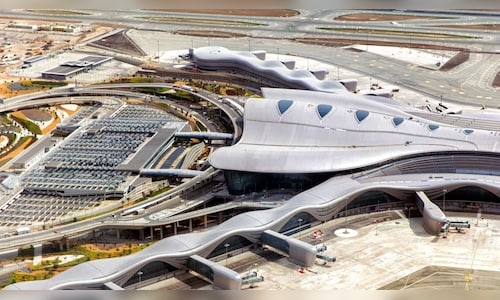
The swift increase in passenger numbers emphasizes Dubai’s role as a significant hub for East-West travel in global aviation, highlighting the necessity for its $35 billion initiative to construct a vast, five-runway airport at Al Maktoum International Airport located in Dubai World Central.
The city’s secondary airport is currently hosting the biennial Dubai Air Show, where major aircraft orders have already been placed by long-haul carrier Emirates and its budget airline, FlyDubai. These acquisitions will facilitate a substantial expansion of the routes operated by both government-owned airlines.
Also read | Travel spending trends in India: How Gen Z and women manage budgets
“These unprecedented outcomes illustrate the ongoing robustness of Dubai’s aviation and tourism sectors,” stated Paul Griffiths, the CEO of Dubai Airports. “However, it also underscores the significance of future developments. The vision for DWC transcends mere capacity expansion – it embodies the reimagining and evolution of the comprehensive travel experience.” Dubai International Airport, known as DXB, serves as the hub for the long-haul carrier Emirates, which supports the network of state-owned and state-linked enterprises referred to as “Dubai Inc.”
The growth of Al Maktoum, commonly referred to as DWC, will also stimulate a significant real estate expansion within this emirate in the United Arab Emirates, particularly in its southern regions. Dubai intends to transition its airport operations to DWC, which is approximately 45 km away from DXB.
A booming real estate market and record-high tourism figures have established Dubai as both a prime destination and a layover point. However, the city is currently facing challenges such as rising traffic and costs impacting both its Emirati citizens and the foreign residents fueling its economy.
Also read | Emirates to begin rollout of free Starlink Wi-Fi from November 23
Last year, DXB recorded a staggering 92.3 million passengers, an increase from 86.9 million passengers in 2023. It had hosted 89.1 million passengers in 2018 — its previous all-time busiest year prior to the pandemic, and 66 million passengers traveled through in 2022.
(Edited by : Jerome Anthony)