





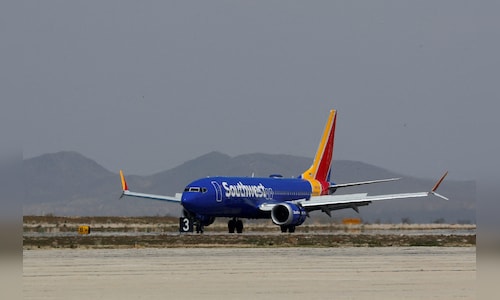
Southwest Airlines announced on Tuesday that starting April 20, passengers will be restricted to one charger per flight, which must remain outside of checked luggage and the overhead bin. The airline already mandates that chargers be kept visible during use, allowing flight attendants to respond swiftly if they begin to overheat.
This new rule from Southwest exceeds the International Civil Aviation Organization’s recent recommendation of two chargers per passenger. However, the airline stated that it will not rigorously enforce the policy by checking bags or seizing chargers. Instead, Southwest’s Vice President of Safety and Security, Dave Hunt, mentioned that the airline would emphasize this rule to travelers during booking and at the airport, highlighting the potential hazards.
This approach could be quite effective, as many people are not aware of the associated risks, according to Jeff Marootian, CEO of UL Standards & Engagement, an organization that sets guidelines for charger manufacturers and other electronic device makers.
“A significant part of the concern is the rising number of incidents, which correlates with the growing number of devices passengers bring onto planes,” he stated.
The Federal Aviation Administration noted that lithium battery incidents are on the rise, with 97 reported in 2025 as people bring more rechargeable devices like phones, tablets, laptops, and portable chargers onboard. Marootian reported that his organization gets reports of two incidents each week and has observed a 42% increase in incidents involving portable chargers in 2025.
One of the most serious incidents occurred in January 2025 when a fire on an Air Busan flight, preparing for takeoff at a South Korean airport, led to the evacuation of all 176 passengers as flames breached the aircraft’s roof.
Flight attendants are equipped with fire-resistant bags and insulated gloves to manage overheating devices, helping to contain any potential fire. Southwest’s Hunt expressed that the new policy will “enhance our ability to manage and mitigate lithium battery incidents, reducing the risk of battery fires.”
To facilitate this regulation for travelers, Southwest plans to install in-seat power outlets on all its planes by the middle of next year.
Aviation safety expert Steve Arroyo, who has a 37-year history with United Airlines, believes Southwest’s new policy is a constructive measure to lower risks. Although the frequency of these fires is minor in comparison to the approximately 100,000 flights taking place daily worldwide, the potential outcomes of a battery fire can be severe.
“It can escalate into a very serious situation very rapidly,” Arroyo remarked.