





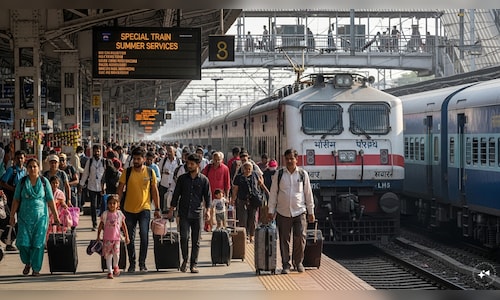
On Thursday, 23 April, Union Railway Minister Ashwini Vaishnaw assessed the operations of summer special trains in New Delhi.
In an update on X, the ministry stated: “Hon’ble MR Ashwini Vaishnaw reviews the operation of Summer Special Trains in New Delhi, as Indian Railways plans 18,262 special train trips during the peak summer travel season to facilitate passenger movement and enhance connectivity on high-demand routes.”
Hon’ble MR Shri @AshwiniVaishnaw reviews the operation of Summer Special Trains in New Delhi, as Indian Railways plans 18,262 special train trips during the peak summer travel period to ease passenger movement and strengthen connectivity across high-demand routes.
Read more:…
— Ministry of Railways (@RailMinIndia) April 24, 2026
The ministry reported that 908 special trains have been approved for this timeframe, totaling 18,262 trips. To date, over 11,800 trips (660 trains) have been officially announced and are available for booking, with the remaining services to be released gradually.
“During the peak summer travel period (15 April–15 July 2026), the Railways is aiming to run 18,262 summer special train journeys to improve connectivity and alleviate congestion. This extensive deployment is a result of a strategic approach featuring increased rake availability, optimized scheduling, and ongoing monitoring,” stated the ministry.
Focus is placed on high-traffic areas like New Delhi, Mumbai (including LTT, CSMT, and Pune), Surat (including Udhna), Ahmedabad, and Bengaluru to facilitate the efficient movement of passengers.
By introducing these special trains on key routes, Indian Railways seeks to lessen inconveniences during the seasonal travel surge. This extensive rollout aims to decrease waiting lists, enhance the supply of confirmed berths, and bolster connectivity between major urban centers and regions.
With timely planning and the announcement of thousands of additional trips, the Railways continues to prioritize passenger comfort and convenience.
Zone-wise details
Summer special trains will function across all major zones of Indian Railways, ensuring equitable regional connectivity and effective passenger management. Here’s the zone-wise breakdown:
- South Central Railway: 124 trains (1,184 trips) approved; 76 trains (324 trips) notified
- Western Railway: 106 trains (2,078 trips) approved; 92 trains (1,667 trips) notified
- North Western Railway: 76 trains (2,245 trips) approved; 62 trains (1,878 trips) notified
- Northern Railway: 76 trains (2,090 trips) approved; 56 trains (1,535 trips) notified
- Central Railway: 74 trains (3,082 trips) approved; 70 trains (2,238 trips) notified
- Southern Railway: 72 trains (558 trips) approved; 38 trains (133 trips) notified
- East Central Railway: 64 trains (2,711 trips) approved; 38 trains (1,060 trips) notified
- North Central Railway: 54 trains (1,163 trips) approved; 46 trains (688 trips) notified
- North Eastern Railway: 52 trains (814 trips) approved; 34 trains (477 trips) notified
- East Coast Railway: 28 trains (410 trips) approved; 18 trains (88 trips) notified
- West Central Railway: 28 trains (408 trips) approved; 18 trains (192 trips) notified
- Eastern Railway: 24 trains (392 trips) approved; 10 trains (276 trips) notified
- Northeast Frontier Railway: 24 trains (220 trips) approved; 20 trains (141 trips) notified
- South Eastern Railway: 20 trains (276 trips) approved; 18 trains (250 trips) notified
- South East Central Railway: 10 trains (122 trips) approved; 8 trains (70 trips) notified
- South Western Railway: 76 trains (509 trips) approved; 56 trains (277 trips) notified