





The launch of the project coincided with the Maharashtra Foundation Day.
CM Fadnavis inaugurated the Missing Link at the Khalapur (Raigad district) end of the expressway and subsequently drove on the Lonavala-bound lane of the new project, with Deputy Chief Minister Eknath Shinde alongside him in the vehicle.
This Missing Link project connects Khopoli on the Mumbai side to Kusgaon near Lonavala in Pune district, and it aims to make the expressway fully access-controlled, thereby alleviating congestion in the ‘ghat’ (mountain pass) area.
The initiative is part of a modern 19.16-km corridor that also features an expansion of a 5.86-km six-lane segment between Khalapur and the Khopoli interchange to eight lanes, as stated by the MSRDC in a release.
Officials noted that the Missing Link will shorten the Mumbai-Pune travel distance by approximately 6 km and reduce journey time by 20 to 30 minutes.
At first, only light motor vehicles and buses will be permitted on the new stretch, while heavy goods vehicles will continue utilizing the existing ghat route due to safety concerns.
Authorities confirmed that there will be no toll increase related to the project, including at the Khalapur toll plaza in Raigad district.
The tunnels were built using the New Austrian Tunnelling Method (NATM), which involved comprehensive geological studies across diverse rock formations in the Sahyadri ranges, according to the MSRDC.
Tunnel No. 1 is 1.58 km long, while Tunnel No. 2 extends 8.86 km. The tunnels, measuring about 23.5 metres in width, rank among the widest road tunnels in the world, with applications submitted for recognition in the Guinness Book of Records.
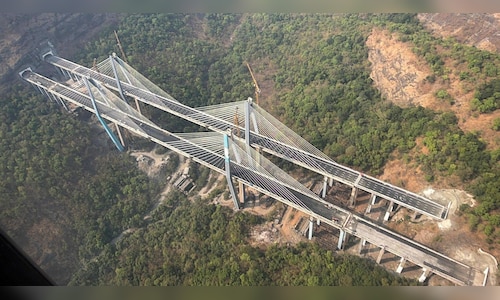
The 650-metre viaduct features what officials refer to as India’s tallest road cable-stayed bridge, with pylons climbing to 182 metres and supported by 240 stay cables. The bridge underwent rigorous international testing, including wind tunnel, fatigue, and tensile tests.
Tunnel No. 2 is situated nearly 180 metres below the level of Lonavala lake, posing significant challenges for excavation and blasting, as noted in the release.
The project was executed in a challenging mountainous environment characterized by heavy rainfall, strong winds, and low visibility, it added.
According to the MSRDC, the initiative is anticipated to enhance road safety by circumventing accident-prone ghat sections and decrease fuel consumption, leading to estimated daily savings of approximately Rs 1 crore while simultaneously reducing pollution levels.
The roughly 95-km-long Mumbai-Pune Expressway holds the distinction of being India’s first access-controlled highway.