








Editor’s Note: The following essay was originally published on cosmetic chemist and BeautyStat founder Ron Robinson’s Clinically Speaking Substack newsletter and is republished with permission.
When I first started working in cosmetic chemistry in the 1990s, men’s grooming was still considered niche. If a man cared too much about skin care, ingredients or his appearance, he was often labeled “metrosexual,” and not always in a flattering way.
Outside of places like New York or LA, most men’s routines were minimal at best: soap, shaving cream, maybe aftershave. Skin care was rarely framed as wellness or self-care and was often viewed as vanity.
Fast forward to today, and the pendulum has swung in the opposite direction. Men’s grooming has evolved into a massive global industry. In 2025, according to Nielsen IQ, the U.S. men’s grooming category brought in sales of $7.1 billion, “up 6.9 percent year-over-year, with online channels driving much of the momentum.”
Much of that growth has been fueled by wellness culture and social media trends. I believe men should take care of their skin. I’ve spent my entire career developing products designed to help people feel healthier and more confident in their appearance.
Some of these shifts have genuinely been positive. Men today are more open about self-care, mental health, wellness and aging than previous generations were allowed to be. Skin care is no longer viewed as something exclusively for women, and younger consumers are far more educated about ingredients, sunscreen, hydration and preventive care than they were even a decade ago.
Looksmaxxing vs. Looksbettering
But social platforms tend to amplify extremes, and increasingly, the conversation around appearance has shifted from health and confidence into optimization and perfection. Online (popularized by social media incluencer, Clavicular), this culture now has a name: “looksmaxxing.” It’s built around the idea that appearance should be constantly upgraded, optimized, and engineered toward some idealized version of perfection. Online communities often divide it into two categories:
Softmaxxing: Grooming, skin care, fitness, style and other non-invasive ways of improving appearance.
Hardmaxxing: More aggressive interventions like cosmetic surgery and procedures, unsupervised hormone use or extreme internet trends designed to radically alter appearance.
Some of the more extreme corners of looksmaxxing culture have produced trends that would have sounded unbelievable a few years ago. One phenomenon explored in a recent GQ article is “bonesmashing,” a viral practice promoted in online forums and social videos that involves repeatedly hitting facial bones in an attempt to create a sharper jawline or more sculpted facial structure. Proponents often cite “Wolff’s law,” a 19th century scientific principle that purports that bones adapt and strengthen through stress over time. But medical experts warn that bonesmashing misrepresents and misapplies the concept, leading to fractures, nerve damage, facial asymmetry and long-term injury.
What makes the culture of looksmaxxing particularly powerful is that it often disguises itself as discipline, wellness or self-improvement. And while there’s nothing wrong with wanting to look or feel your best, the line between healthy self-care and obsessive self-optimization can blur very quickly online.
Even “softmaxxing” seems rooted in the belief that self-worth is tied to constant optimization. I think there’s a healthier alternative. My husband, Steven Sokoll, MD, a clinical professor of psychiatry at the Perelman School of Medicine at the University of Pennsylvania, recently shared a term with me that really resonated: “looksbettering.”
“The desire for men to improve their appearance follows from the positive intention to take care of themselves, like getting enough sleep, eating healthy food, caring about their appearance and socializing,” he explains.
He describes “looksbettering” as a healthy, wellness-based approach to self-care. However, he notes, “When one strives with intensity for an absolute or perfect result in which pursuit of the ideal is an absolute goal, when this pursuit comes with great emotional distress and when perceived failure comes with great disappointment and shame, then this intention has gone overboard. And this appears to be the case with Looksmaxxing.”
That distinction matters. To me, looksbettering is about caring for yourself in a sustainable, healthy and evidence-based way rather than chasing perfection. And if there’s a broader philosophy behind it, I’d call it “balancemaxxing,” where you approach self-care with consistency and perspective instead of extremes. In my own life (fyi I’m 60 years old), I approach this concept through topical skincare, consistent exercise, long walks, sunscreen and staying socially connected.
As a cosmetic chemist, I’ve seen firsthand how misinformation and online trends can distort people’s understanding of skin health. One of the biggest misconceptions online right now is the idea that more aggressive automatically means more effective. Consumers are constantly shown before-and-after videos, aggressive procedures and “miracle” products designed to promise overnight change. But real skin biology doesn’t work that way. In cosmetic chemistry, balance and consistency almost always outperform extremes.
Healthy skin is built slowly. The skin barrier functions best when it’s supported consistently over time, not constantly stripped and over-treated. Ironically, many of the aggressive trends marketed as shortcuts to “perfect” skin can actually compromise the very thing people are trying to improve.
Take the growing normalization of injectable peptides, testosterone treatments and other hormonal interventions among younger men online. These are complex interventions that can affect the skin and body in ways people may not fully understand. In many cases, they can also contribute to skin issues including increased oil production, inflammation, acne flare-ups and barrier disruption.
Meanwhile, appearance-related concerns can often be improved through consistent, evidence-based topical skin care and healthier daily habits.
The Measured Blueprint: A Cosmetic Chemist’s Approach for Balance
Healthy-looking skin doesn’t require chasing every extreme trend online. In many cases, clinically-studied topical ingredients and consistent daily habits can address common skin concerns in a more balanced, sustainable way.
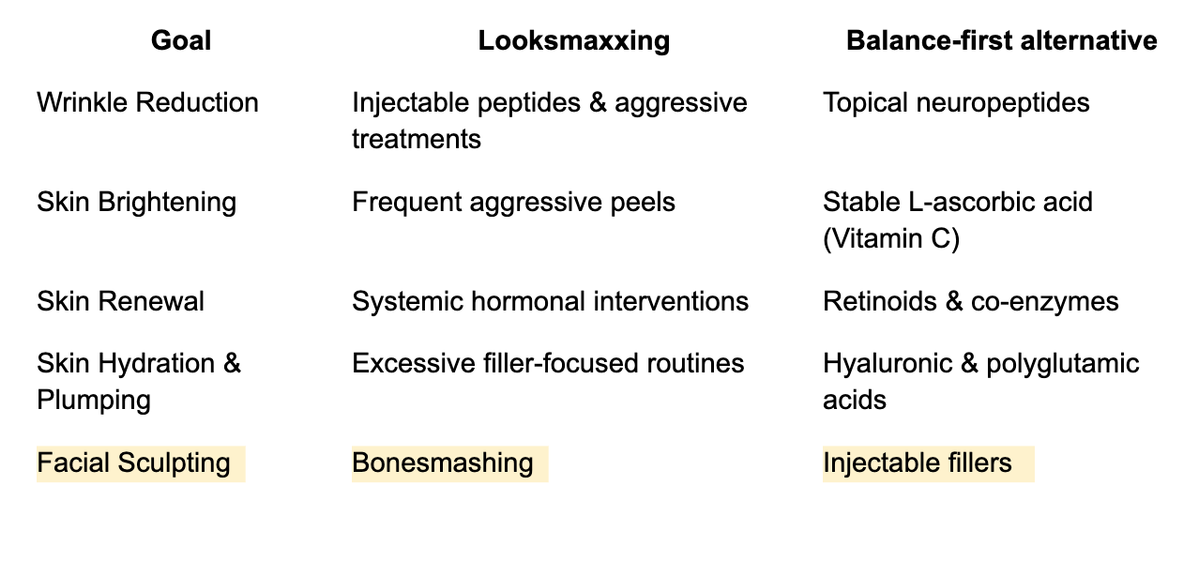
Consumers often don’t realize how sophisticated topical cosmetic chemistry has become over the last two decades. Modern delivery systems, encapsulation technologies, stabilized antioxidants and clinically-tested peptide formulations can support visible improvements in the skin without requiring extreme intervention.
That philosophy is exactly what led me to develop BeautyStat’s Universal C Skin Refiner, which uses the most potent form of vitamin C alongside peptides and barrier-supporting ingredients to brighten skin, improve texture and support collagen production without compromising the skin barrier. One of the biggest challenges in cosmetic chemistry has always been stabilizing vitamin C so it remains effective over time, which is why formulation matters just as much as ingredients themselves.
That doesn’t mean there’s never a place for dermatological procedures or medical treatments. But there’s a major difference between working thoughtfully with qualified professionals and chasing increasingly extreme online trends.
None of these “balance-first alternatives” promise overnight transformation, and that’s actually the point. In skin care, the healthiest results usually come from supporting the skin consistently over time, not forcing rapid change through increasingly aggressive intervention.
If your goal is healthier-looking skin, the fundamentals still matter most:
- Daily sunscreen
- Stable vitamin C antioxidants
- Retinoids
- Peptides and barrier-supporting hydration
- Sleep, exercise, stress management and proper nutrition
While the basics may not feel as exciting as viral skin care trends and biohacking culture, the fundamentals are what actually work long-term. In my experience, consumers often damage their skin because they’re doing too much, too aggressively and too inconsistently.
“Balancemaxxing” isn’t as flashy as “looksmaxxing,” but healthy skin is rarely built through extremes. It’s built through consistency, protection and patience. At BeautyStat, our philosophy has always been “Science Minus the BS.” That means focusing on ingredients and formulations backed by real clinical research, not dubious marketing or internet hype.
Maybe the healthiest version of self-improvement isn’t about maximizing anything at all. Maybe it’s about balance.