





The airline also expressed its intention to further its presence in India, with plans to reintroduce the Kolkata-Kunming route and launch a new Mumbai-Shanghai route in the near future.
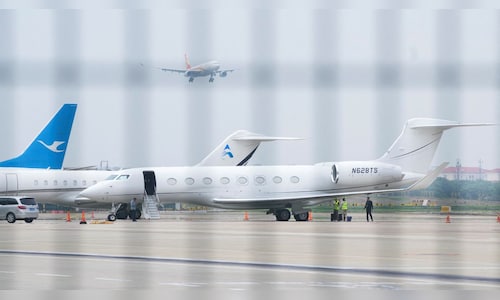
During the winter schedule, flight MU564 is set to depart from Delhi’s Indira Gandhi International Airport at 19:55, arriving at Pudong International Airport in Shanghai at 04:10 the next day, according to a statement from China Eastern Airlines.
The return flight MU563 leaves Shanghai at 12:50 and lands in Delhi at 17:45, the airline confirmed.
Also read | Japan’s Chinese tourist boom slows amid simmering tensions
This rapid expansion is a response to strong demand and a commitment to enhancing air connectivity between India and China, following the successful relaunch of the route in November 2025 after a five-year pause, the airline stated.
Initially, the route was set to increase gradually from three to five weekly flights, but the overwhelming response from passengers and trade partners led China Eastern to immediately offer daily flights.
Flight services between the two nations were halted due to the COVID-19 pandemic in 2020 and were not restored due to the more-than-four-year border standoff in eastern Ladakh, which concluded in October last year.
InterGlobe Air Transport, the exclusive General Sales Agent (GSA) for China Eastern Airlines in India, oversees the airline’s full commercial and operational functions, including sales, marketing, ticketing, and support.
Also read | Instagram-worthy travel destinations: 10 places around the world that guarantee picture-perfect memories
The airline now offers interline connectivity, enabling travelers to book seamless single-ticket journeys to and from 39 Indian cities via Delhi to Shanghai and onwards to various destinations within China Eastern’s extensive global network.
The relationship between India and China deteriorated to its lowest since the 1962 war following the Galwan Valley clashes in June 2020. After multiple diplomatic and military discussions, both sides withdrew troops from several friction points along the Line of Actual Control (LAC) in eastern Ladakh.
In October last year, an agreement for disengagement was established for the last two friction points, Depsang and Demchok.
Shortly after this agreement was made, Prime Minister Narendra Modi and Chinese President Xi Jinping convened in Kazan, Russia, to make several decisions aimed at improving their bilateral relationship.
In recent months, both sides have undertaken various initiatives to mend ties, including the resumption of the Kailash Mansarovar Yatra and the reinstatement of flights.