






Data from the CPCB, accessed through its Sameer mobile application, indicated that the national capital reported an AQI of 392 in the morning, solidifying its air quality in the “very poor” range.
Certain areas, however, fell into the “severe” category. Anand Vihar recorded one of the highest pollution levels, with an AQI of 444, according to news agency PTI.
Among the monitoring stations throughout the capital, 19 indicated “severe” air quality, while others maintained “very poor” conditions. According to CPCB criteria, AQI values from 301 to 400 categorize as “very poor,” and those exceeding 400 are deemed “severe.”
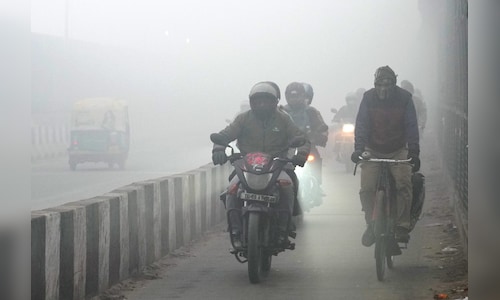
Dense smog blankets Delhi
Residents awoke to a thick layer of smog, lowering visibility across many parts of the city. Images from locations like Anand Vihar showed roads and residential areas shrouded in dense haze, as pollution levels exceeded 400 in several spots, as reported by News18.
#WATCH | Delhi | Visuals from the Akshardham area reveal a layer of smog enveloping the national capital.
AQI (Air Quality Index) around this area is 445, classified as ‘Severe’, according to the CPCB (Central Pollution Control Board). pic.twitter.com/oJ28FHa4Az— ANI (@ANI) December 28, 2025
The pollution situation had already deteriorated by the evening of Saturday, December 27, with the overall AQI reaching 390.
Additional areas in Delhi-NCR reported even higher levels, including Patparganj at 431, Nehru Nagar at 442, Shadipur at 429, Sirifort at 402, and RK Puram at 412, indicating extensive “severe” air quality.
Travel disruptions amid low visibility
The combination of smog and winter fog caused reduced visibility and disruptions in transport. Numerous trains faced delays, with visuals emerging from New Delhi Railway Station showing hazy conditions, as reported by PTI.
The Delhi airport also issued a fog advisory for travelers. In a post on X (formerly Twitter), they stated, “All flight operations are continuing normally as visibility at the airport improves. Passengers are encouraged to contact their respective airlines for updated flight information. Our on-ground officials are available across all terminals to assist.”
#WATCH | Visibility improves at the runway at IGI airport as early morning fog dissipates across Delhi-NCR.
Delhi Airport issued a passenger advisory at 9 am stating, “All flight operations are continuing normally as visibility at the airport improves. Passengers are… pic.twitter.com/I2jixjEA2v— ANI (@ANI) December 28, 2025
Cold weather worsens pollution
The India Meteorological Department (IMD) recorded a minimum temperature of 6.3 degrees Celsius on December 28, nearly 0.5 degrees below the seasonal average, with a humidity level of 71% at 8.30 am, as reported by PTI.
The maximum temperature is anticipated to reach around 21 degrees Celsius, with predominantly clear skies expected. According to the weather agency, stagnant winds, chilly conditions, and dense fog are trapping pollutants near the ground.
The Commission for Air Quality Management (CAQM) has responded by implementing Stage III measures under the Graded Response Action Plan (GRAP), which includes restrictions on construction and industrial activities, while policies like the “No PUC, No Fuel” rule remain enforced.
#WATCH | Delhi | Footage from around India Gate shows a layer of toxic smog enveloping the national capital.
AQI (Air Quality Index) in this area is 378, classified as ‘Very Poor’, according to the CPCB (Central Pollution Control Board). pic.twitter.com/FJF7ShS39g— ANI (@ANI) December 28, 2025
Health advisories continue to recommend that vulnerable populations limit outdoor activities during times of “very poor” air quality, according to News18.