





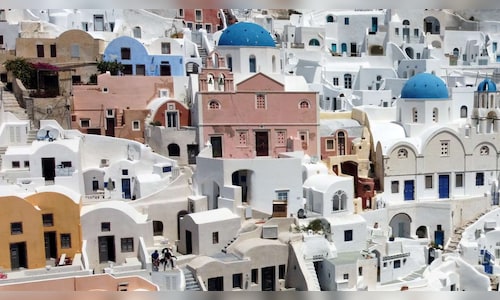
From January through the end of September, the Mediterranean country, cherished for its sunny islands and rich archaeological heritage, received 31.6 million visitors, marking a four-percent increase from the same period in 2024, based on data from the Bank of Greece released in late November.
“Overall, we anticipate that 2025 will be another record year for tourism in our nation,” Kefalogianni stated in an interview with the Greek news agency ANA.
The conservative minister also expressed optimism for another successful year in 2026.
“The indicators for 2026 are already looking particularly promising and give us reason to be hopeful,” she added.
Also read | Rome’s new Colosseum metro station featuring archaeological displays opens to tourists
Since the Covid-19 pandemic, Greece has consistently set new yearly records in tourism revenue and foreign visitor numbers.
Throughout 2024, 40.7 million individuals visited Greece, an increase of 12.8 percent from 2023.
However, this rise has raised concerns about uncontrolled construction in various hotspots, while residents of Athens have expressed discontent as the surge in short-term holiday rentals has led to rent increases.
Additionally, climate change-driven heatwaves and increasingly severe wildfires threaten the tourism sector, which Prime Minister Kyriakos Mitsotakis has championed since assuming office in 2019 to revitalize the economy post-financial crisis.
Also read | India streamlines visa regulations in a boost for Chinese professionals
According to the Institute of the Greek Tourism Confederation (INSETE), tourism contributed directly about 13 percent to GDP in 2024, and indirectly accounted for over 30% of GDP.
Meanwhile, farmers in Greece have been protesting and have vowed to continue road blockades for a second consecutive week, even as the prime minister reiterated on December 21 that the government is willing to engage in dialogue.
Greek farmers are frustrated by significant delays in subsidy payments resulting from a scandal involving misappropriated European Union agricultural aid, in addition to pressures from low prices, increasing energy costs, and deteriorating climate conditions.
“Occupying roads and other public infrastructure that belong to everyone… is harmful to the country” as well as to “local economies in these regions,” stated conservative Prime Minister Kyriakos Mitsotakis in a Facebook post.
After a meeting on Saturday afternoon, farming unions declined the prime minister’s invitation for discussions on Monday, following last week’s temporary blockade of the central port of Volos by protesters.
This port serves as a crucial entry point to Thessaly, Greece’s agricultural hub, which is struggling to recover from the severe destruction of livestock and infrastructure caused by Storm Daniel in 2023.