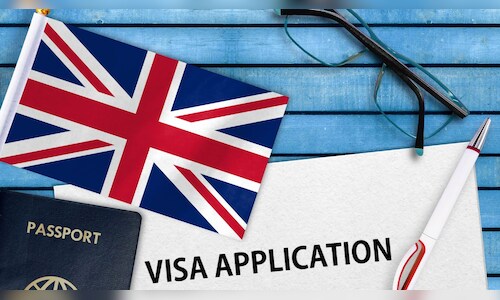







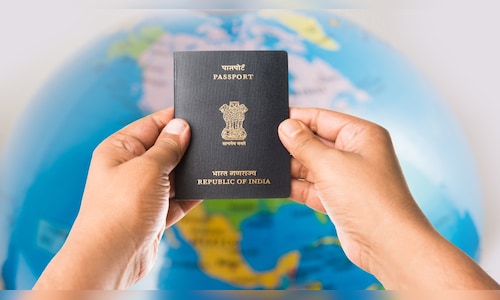
A senior MEA official stated that existing machine-readable passports will stay valid until their expiration and will continue to be accepted until 2035. The rollout of e-passports coincides with the broader launch of the updated Passport Seva Programme (PSP V2.0), the Global Passport Seva Programme (GPSP V2.0), and the new e-passport system for both domestic and international applicants.
The e-passport features an embedded radio frequency identification (RFID) chip and antenna that store essential personal information in accordance with International Civil Aviation Organization (ICAO) standards. Officials highlighted that the same data is printed on the passport’s data page, which significantly decreases the likelihood of forgery.
Also read | India launches chip-enabled e-passports: Is it mandatory and when should you apply?
Pilot testing commenced in 2024 at the Regional Passport Offices in Bhubaneswar and Nagpur, and after successful trials and certification, the nationwide rollout was completed by May 2025. Since June of this year, Indian missions abroad have also issued around 62,000 e-passports.
Discussing the security features, an MEA official mentioned that the data on the chip is “read-only” and can only be accessed during authorized checks, like at immigration counters. “This data cannot be retrieved by anyone else if a person’s e-passport is lost or stolen. In case of theft, once a police report is filed, the complete data on the chip can be locked by authorities,” the official explained.
The upgraded system now cross-checks embedded chip data with biometric information collected during the application process. One official described this as “a significant upgrade” that aids in detecting impersonation attempts or the use of another person’s identity. “If someone tries to forge a passport or impersonate someone or obtain a passport in someone else’s name, the new system will first alert if a passport with that name and demographic data already exists,” the official added, noting that biometric matching will further highlight fraudulent activities. Photographs included in the new passports will also conform to ICAO standards.
Also read | MEA announces rollout of upgraded Passport Seva system and introduces e-passports
Under PSP V2.0, the government aims to create a digitally integrated system that connects all passport stakeholders to enhance transparency, efficiency, and user convenience. New features include an upgraded website and mobile app featuring auto-filled forms, simplified document uploads, and online payments via UPI or QR codes. AI-enabled chat and voice assistants will support applicants and aid in handling grievances.
The MEA described the launch of e-passports and PSP V2.0 as “another important milestone,” adding: “Critical information printed on the data page is also stored electronically on the chip, facilitating enhanced security and authentication. Moving forward, all newly issued passports will be e-passports, whereas existing non-electronic passports will remain valid until their expiration.”
The updated PSP has been fully implemented across 37 Passport Offices, 93 Passport Seva Kendras (PSKs), and 451 Post Office Passport Seva Kendras (POPSKs) as of May 26, 2025. GPSP V2.0 was further rolled out across 202 Indian embassies and consulates overseas on October 28.
Officials indicated that nearly 100 countries are equipped to process e-passports, and in locations without such facilities, the machine-readable segment can still be scanned. The government manages three data centers in Noida, Chennai, and Bengaluru to support the new system, which remains entirely under the Centre’s ownership. A seven-layer security architecture has been established to protect data and prevent cyberattacks.