






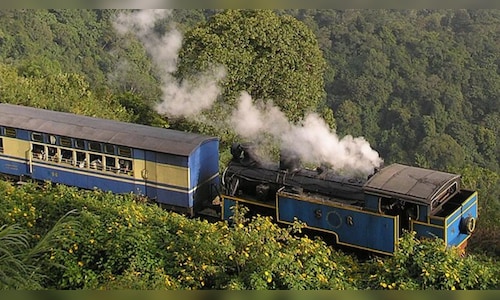
Meandering through steep hills, woodlands, and timeless bridges, India’s slowest train makes its ascent at a leisurely pace of just 9 km per hour, transforming an ordinary journey into a heritage adventure. This photo essay delves into the Nilgiri Mountain Railway’s distinctive path, rich history, and enchanting charm, illustrating why its relaxed tempo remains appealing to travelers in today’s fast-paced world.
2 Min Read

 1 / 8
1 / 8This legendary Nilgiri Mountain Railway service ascends through the Western Ghats at a mere 9 km per hour, earning the title of India’s slowest passenger train. Its gentle speed is a result of challenging gradients and sharp curves carved through the blue hills of Tamil Nadu. (Picture: Wikimedia Commons)
 2 / 8
2 / 8As part of the renowned Nilgiri Mountain Railway, this route is designated as a UNESCO World Heritage Site for its centuries-old engineering and cultural significance. Established in the early 1900s, the railway still employs technology originally intended for mountain routes over a century ago. (Picture: Wikimedia Commons)
 3 / 8
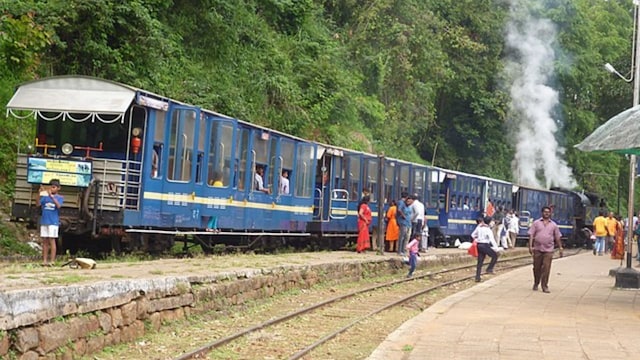
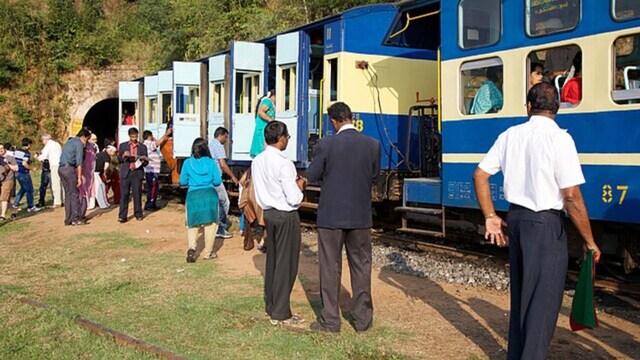
3 / 8Traversing approximately 46 km in about five hours, the train links the plains of Mettupalayam with the hill station of Ooty. It halts at charming stations such as Coonoor, Wellington, Aravankadu, and Lovedale, each nestled along forested ridges. (Picture: Wikimedia Commons)
 4 / 8
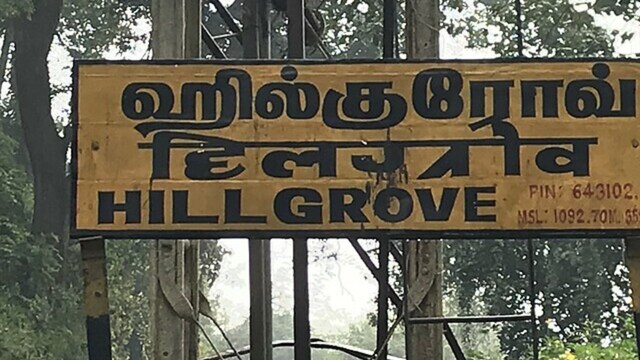
4 / 8What accounts for this slow pace? The train operates on a rack-and-pinion mechanism on steepest inclines, ensuring it holds onto the tracks while making the uphill crawl. Sharp curves and ongoing gradients necessitate low speeds for safe ascents. (Picture: Wikimedia Commons)
 5 / 8
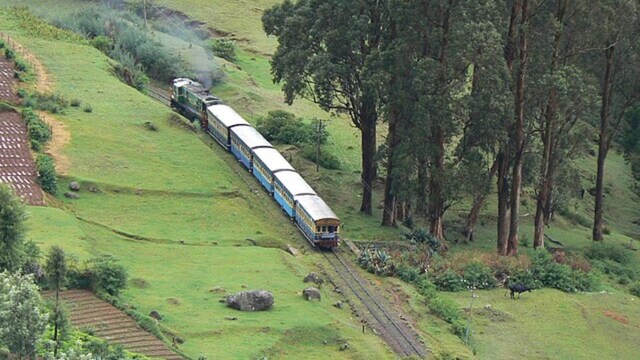
5 / 8The leisurely pace becomes beneficial as the train glides past tea estates, eucalyptus plantations, and hills shrouded in mist. Each turn unveils captivating vistas of the Nilgiris, sights that might be overlooked on a faster railway. (Picture: Wikimedia Commons)
 6 / 8
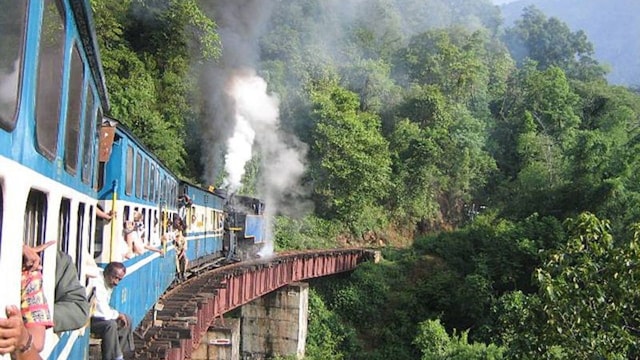
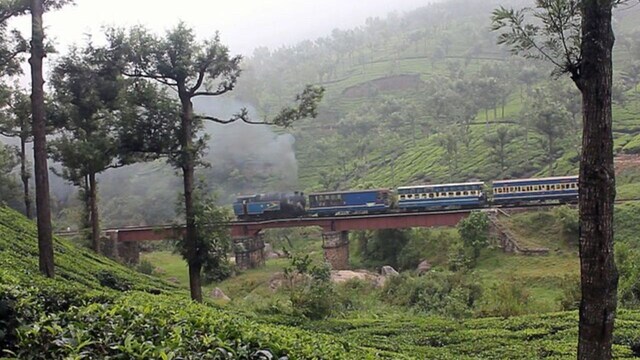
6 / 8Passengers traverse numerous small bridges and historical tunnels while relaxing in blue-and-cream coaches that embody old-world elegance. Certain segments still use vintage steam engines, heightening the nostalgic vibe of a toy train. (Picture: Wikimedia Commons)
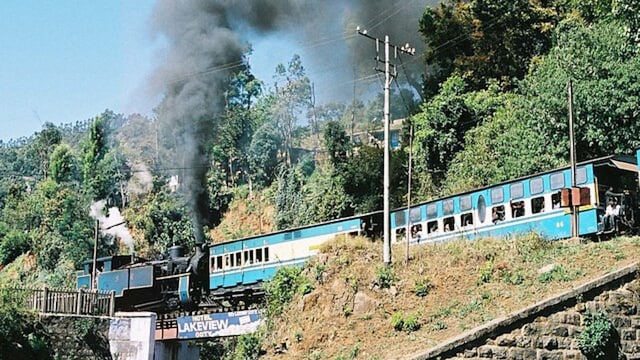 7 / 8
7 / 8Although it may be the slowest in India, this train is among the country’s most popular journeys, particularly during holidays and peak times. Many passengers embark on this ride purely for the experience rather than the destination, drawn by its exceptional heritage allure. (Picture: Wikimedia Commons)
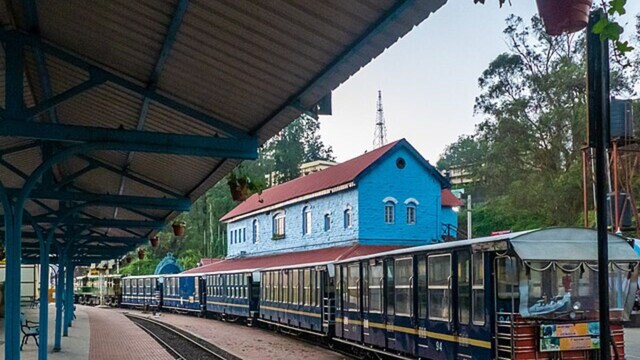 8 / 8
8 / 8In an age of rapid transit and speedy trains, this slow movement through the hills reminds riders that speed isn’t paramount. The Nilgiri Mountain Railway emphasizes the pleasure of a leisurely, scenic adventure rather than merely reaching Ooty. (Picture: Wikimedia Commons)