






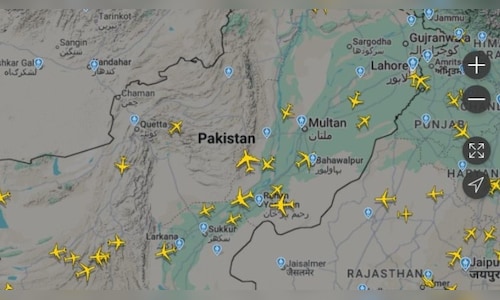
The previous extension was scheduled to end on December 24, but the Pakistan Airports Authority (PAA) announced on Wednesday that the restrictions would last until January 23. The PAA stated, “Pakistan airspace will remain closed to Indian-registered aircraft, including all aircraft owned, operated, or leased by Indian airlines, as well as Indian military flights.”
According to the NOTAM (Notice to Airmen), the existing restriction “will continue until January 23, 2026, as per the specified timings.” Pakistan’s airspace consists of two flight information regions (FIRs)—Karachi and Lahore, based on a Pakistan Civil Aviation Authority (PCAA) document from 2022.
The NOTAM is applicable to both Karachi (OPKR) and Lahore (OPLR) FIRs.
Also read | Instagram-worthy travel destinations: 10 places around the world that guarantee picture-perfect memories
A terror attack in April in Pahalgam, Jammu and Kashmir, resulted in 26 fatalities and sparked a four-day conflict in May between India and Pakistan. Since then, Islamabad has repeatedly extended its ban on Indian airlines flying over its airspace. Similarly, India has imposed a ban on Pakistan.
On December 17, Khyber Pakhtunkhwa province in Pakistan announced the closure of 42 camps that had housed Afghan refugees for over four decades.
Following the Soviet invasion of Afghanistan in 1979, millions of Afghan refugees migrated to Pakistan. Khyber Pakhtunkhwa, being a border province, hosted the highest number of these refugees for many years.
Authorities claim that the closure of these nearly 45-year-old refugee camps aims to streamline the processes of residence and registration for refugees in the province and to eliminate illegal and unregulated camp residents.
Official sources indicated on Wednesday that the camp closures were executed in two phases.
Also read | India shuts visa application centre in Dhaka over security concerns
In the first phase, five refugee camps were shut down, while the remaining 37 camps across the province were closed on Tuesday during the second phase.
The provincial government has notified the federal government regarding the latest developments, sources reported.
Officials stated that the principal aim of closing the camps was to conclude the repatriation of Afghan refugees.
The operation was backed by police and other law enforcement agencies to ensure proper enforcement, with actions taken against unregistered Afghan refugees in accordance with government policy.
Following the closures, the voluntary repatriation process has accelerated, with over 300,000 refugees preparing to return to Afghanistan.
Officials characterized the closure of these refugee camps as a crucial policy milestone in managing refugee affairs and restoring administrative order in the province.
(Edited by : Jerome Anthony)
First Published: Dec 17, 2025 5:16 PM IST