Polish Beauty Has Been Undefeated for Decades—We Just Weren’t Paying Attention
29 July 2026, 7 min read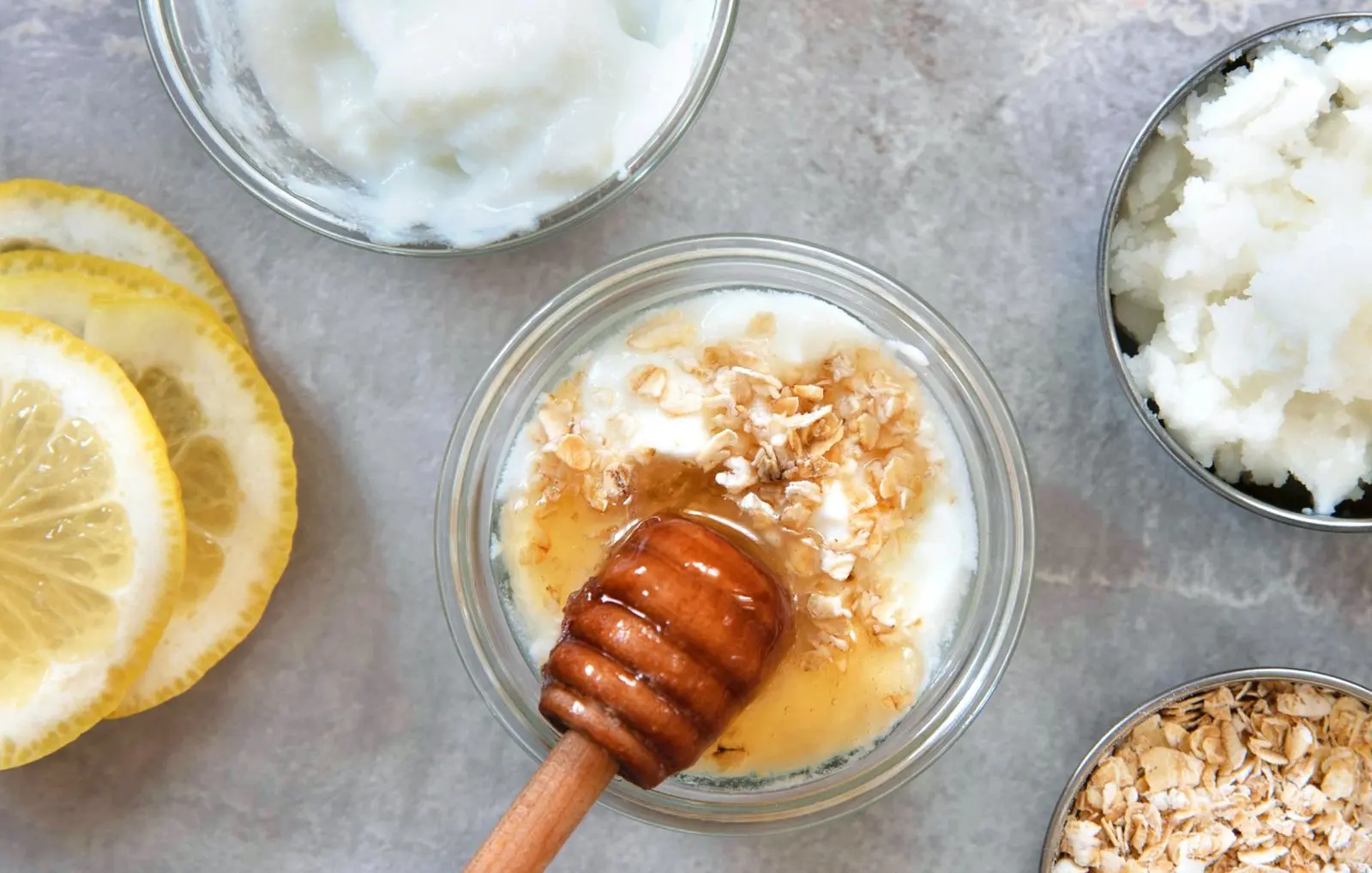
K-beauty gets the credit for introducing us to product categories we never knew we needed—essences, sleeping masks, cushion compacts—wrapped into a 10-step routine. France gets the credit for turning the corner pharmacy into a global cult, one under-the-radar hit at a time. Poland gets the credit for none of it, but it was doing clean beauty and skinimalism before either had a name—at the kitchen table, with whatever was in the pantry.
We spoke with four Polish-born beauty insiders now shaping the industry from very different corners—Danuta Mieloch, founder of Rescue Spa and Danucera; Bart Kaczanowicz, founder of the beauty blog OMGBart.com; Lydia Sarfati, founder and CEO of Repêchage; and Joanna Czech, the celebrity aesthetician and founder of Joanna Czech Skin Care—about the kitchen-table rituals they grew up with, the Polish brands worth stealing and why they think it took so long for the rest of the world to catch up.
Kitchen-Table Rituals
Each of the experts traces their philosophy back to the same scene: mother or aunt, standing in a kitchen, mixing whatever was on hand into a homemade mask. “I grew up in a small town in Poland, where beauty wasn’t something you bought, it was something you practiced,” Mieloch says. “Long before I became an aesthetician, I was a curious little girl mixing honey, egg yolks, chamomile, cucumber, oatmeal and whatever nature gave us into homemade masks in my mother’s kitchen. We didn’t think of them as beauty treatments—it was simply how women cared for themselves.”
Sarfati remembers the same scene. “My mother and my aunt were wonderful role models. I remember watching them prepare homemade face masks and skin treatments right in the kitchen using fresh, natural ingredients. Long before ‘DIY skin care’ became a trend, they believed that nature provided many of the ingredients needed to nourish and care for the skin.” Many of those same ingredients—honey, chamomile, oatmeal, cucumber, cultured dairy like buttermilk—still show up in her award-winning Repêchage formulas today.
Kaczanowicz’s memories are similar, although he is quick to say he grew up in the 1980s and ‘90s, when the country was still shaped by scarcity. “I remember the Berlin Wall coming down…all our trips before that were limited to only being able to visit East Germany. By definition, Poland is technically centrally located, yet it’s most often seen as an eastern European country,” he says. “Even back then, beauty or skin-care rituals were all about simplicity, efficacy and not encroaching on frivolous spending. Self-care wasn’t about indulgence—it was often a combination of at-home hacks and old wives’ tales.”
His most vivid memories include his mother’s beer rinse for shine and strength, a stinging nettle rinse for dandruff and oily scalp made from weeds growing wild in the yard and a DIY mask of natural yogurt and honey. Anything imported was out of reach. “I honestly don’t think I even saw a live avocado until I was a teenager.”
For Mieloch, the lesson that stuck wasn’t a specific ingredient, but a habit. “Moisturizing your skin wasn’t optional or something to debate, it was as natural as brushing your teeth. Even today, I’m surprised by how much confusion still exists around something so fundamental.” That belief in consistency eventually became the foundation of Danucera, built around five intentional skin-care steps that take five minutes. “Beautiful skin isn’t built through excess, it’s built through daily acts of care.”
Czech’s version of the same upbringing centers less on ingredients and more on touch. “Massage and self-massage were just part of life. Every facial included massage because we always believed that healthy circulation and movement are essential for healthy skin,” she says. Facials themselves were never a one-and-done event. “Traditionally, they happened in two stages. The first appointment focused on deeply purifying the skin with careful extractions. Then, four or five days later, you would come back for a gentle peel and a deeply hydrating treatment. When I moved to the U.S., I couldn’t imagine trying to accomplish everything in just one facial.”
The ingredients, when they came into it, were improvised. “Warm herbal compresses were used to soften the skin before extractions because they were gentle and respectful to the skin barrier,” Czech says. “At home, we would make masks by grinding oatmeal and flaxseed, and potatoes were a common remedy for breakouts and post-inflammatory pigmentation because they’re naturally rich in enzymes and vitamin C.” A daily cold-water rinse, she adds, is a habit she never dropped.
The Brands—and the Drugstores—Worth Knowing
Ask about Polish brands worth seeking out, and INGLOT and Ziaja come up almost immediately. “Most makeup enthusiasts will probably find INGLOT familiar,” Kaczanowicz says. “As far as skin care goes, I will always have a special place in my heart for Ziaja. One of the most heritage-driven brands in the skin-care space…with goat’s milk formulas still being iconic decades later.” Mieloch agrees, citing Pollena Uroda and Miraculum from her childhood alongside Ziaja, which “made quality skin care accessible to generations of women. Poland has always had exceptional cosmetic chemists and a culture that values efficacy over excess.”
Kaczanowicz, who moved back to Europe and now visits Poland regularly, has since built out a longer list: Oio Lab, a clean-beauty favorite at the U.S. retailer Beauty Heroes; One Cosmetics, a gender-neutral line with what he calls one of the best acid toners he’s tried in years; Dr. Irena Eris, sold at Sephora in Poland; Pharmaceris, where he discovered a mandelic acid moisturizer that’s now a staple; and BasicLab, a minimalist dermocosmetics brand laser-focused on single ingredients like retinol, peptides and ceramides.
He also offers a primer on where to shop for them. “We still rely on traditional pharmacies—the word is Apteka—for most of the hardcore formulas you read about on Reddit like the 20% azelaic acid Skinoren I buy in threes every visit,” he says. Rossmann is the most popular drugstore chain for the latest in health and beauty; Super-Pharm is closest to the American drugstore experience; and Hebe sits somewhere between mass and masstige, “closer to Ulta.”
Czech is the outlier on this question, and deliberately so. “I honestly think it was less about products and more about the philosophy behind skin care,” she says. “The focus was always on consistency, technique and caring for the skin rather than chasing the newest product.” It’s a distinction she’s carried into her own studio, where nighttime skin-care hygiene, a pH-balancing toner and a genuinely holistic view of the skin matter more than any single formula.
“What we eat, how we sleep, how we move our bodies and how we manage stress all show up in our skin,” she says. Her go-to analogy: The skin should be treated like a sponge that needs hydration and nourishment to function, and the facial muscles like dough—kept supple and healthy through massage and movement. “These aren’t trends for me. They’re the foundation of how I practice esthetics.”
A Trend, or Just Catching Up?
All four reject the idea that Polish and broader Eastern European beauty is having a passing “moment.” Mieloch calls it a return to fundamentals. “Eastern European women have always understood that beautiful skin isn’t achieved by covering imperfections, it’s achieved by caring for the skin itself. The aestheticians I admired emphasized massage, circulation, lymphatic drainage, skin physiology and long-term maintenance decades before those concepts became fashionable on social media. Trends come and go, but rituals endure.”
Kaczanowicz frames it as a shift in who’s paying attention—not what’s being made. “I think Polish beauty has finally found its audience. And it’s local. The Polish customer is no longer shy and subdued, and there is real purchasing power after re-emerging from the post-communism landscape I remember growing up. I don’t think the rest of the world is catching up to what I already knew, I think it’s the opposite. I think Poland realized its value and the talent it holds within it.” He points to Marie Curie, Frédéric Chopin and Nicolaus Copernicus as evidence of a longer pattern. “Maybe what the rest of the world is catching up on is the Polish still waters run deep, too.”
Czech is less sentimental about where things stand today, even at home. “Unfortunately, I think Poland has become more influenced by Western beauty culture, where people are looking for quick fixes and instant results. But our skin hasn’t changed. It still needs the same fundamentals it always has.” If anything, she says, she finds herself reteaching the principles she grew up with—to clients on both sides of the Atlantic. “Healthy skin takes consistency, patience and respect. My philosophy has always been to heal the skin first, restore balance second, and only then address specific concerns. There are no shortcuts when it comes to truly healthy skin.”
Sarfati, however, extends the conversation beyond skin care into wellness—an area she thinks Americans still don’t fully grasp. “Poland has a remarkable wellness tradition that many people may not realize. The country is home to more than 1,000 natural mineral springs and spa destinations, where generations have gone not simply to relax, but to restore their health.” Her own parents spent nearly a month each year at the spa town of Ciechocinek.
“Wellness was not viewed as an occasional indulgence—it was an essential part of maintaining a healthy life.” She’s carried that philosophy into her own daily routine in the U.S., even without the month away. “I believe true beauty comes from caring for yourself consistently. Whether it’s five minutes or five weeks, investing in your well-being is one of the most powerful beauty rituals you can practice.”