







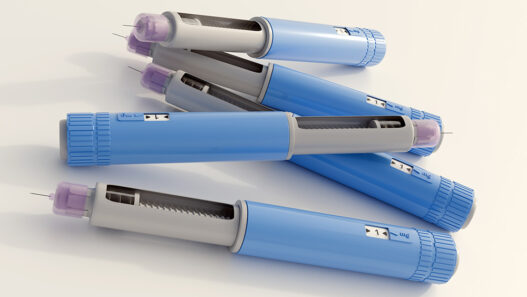

As the World Health Organization recently issued guidance supporting the use of GLP-1 medications in obesity care, these drugs reached a new milestone. For patients, it marks a much-needed shift away from willpower-based narratives and toward understanding weight as something rooted in biology.
But long before Ozempic and Wegovy became household names, the story of GLP-1s started with early gut-hormone research—and an unlikely breakthrough courtesy of a venomous desert lizard. Below, experts walk us through the science of GLP-1s: where it began, what we’ve learned and where the field is headed next.
Featured Experts
- Amanda Kahn, MD is a board-certified internist and longevity expert in New York
- Andrea Traina is the medical director of obesity at Novo Nordisk
- Eduardo Grunvald, MD is a board-certified internist and obesity medicine specialist in San Diego, CA
The Gut Hormone That Almost Didn’t Make It
In the 1980s and 1990s, researchers were trying to understand how the body regulates blood sugar after meals. That work led to the discovery of glucagon-like peptide-1 (GLP-1), a hormone released from the small intestine that helps control insulin secretion, slow digestion and reduce appetite. “Early researchers noticed that GLP-1 powerfully and appropriately stimulated insulin only when glucose levels were high, meaning it lowered blood sugar without causing dangerous hypoglycemia,” says New York internist and longevity expert Amanda Kahn, MD. “It also slowed gastric emptying and reduced appetite, which immediately made it different from other diabetes hormones.”
The problem was timing: natural GLP-1 is broken down within minutes, making it impractical as a medication. For a while, it seemed like promising biology without a path forward.
Enter the Gila Monster
Then the answer arrived from an unexpected place: the Gila monster, a venomous desert lizard known for eating infrequently and surviving long periods without food. “The saliva of the Gila monster creates a substance that looks very similar to the GLP-1 our body naturally makes,” explains Andrea Traina, obesity director for Novo Nordisk. “What the Gila monster makes is Exendin 4. This became the basis for exenatide, the first GLP-1 drug approved in 2005. It was short-acting, lasted a couple of hours and had to be dosed twice a day.”
What made Exendin 4 different was durability. It resisted rapid breakdown, giving scientists a blueprint for designing longer-acting drugs. “That little lizard completely revolutionized our understanding of appetite control, glucose metabolism and inflammation,” says Traina. “We have learned so much from it.”
From Diabetes Drug to Weight-Loss Tool
When exenatide reached diabetes clinics, doctors noticed something unexpected. Patients not only improved their blood sugar levels but also lost meaningful weight. “Clinicians began noticing significant weight loss in diabetes patients taking early GLP-1 drugs like exenatide and liraglutide in the mid-2000s,” says Dr. Kahn. “The turning point came around 2015, when higher-dose liraglutide, under the brand name Saxenda, was approved for obesity, confirming the weight loss effect wasn’t just a side effect, but a primary therapeutic action.”
GLP-1s worked differently from earlier diet drugs. “The reason many people struggle to lose weight with lifestyle changes alone is that the biology gets in the way,” says San Diego internist and obesity specialist Eduardo Grunvald, MD. “These medications reduce hunger, cravings and the reward response to high-fat, high-sugar foods, helping people feel full with less food.” For many patients, that shift shows up as quiet. Fewer cravings. Less food noise.
Semaglutide, the active ingredient in Wegovy and Ozempic, pushed the class further. Large trials showed benefits that extended beyond weight alone. “We have a medication that is well known, respected and proven safe and effective beyond the scale,” notes Traina. “Not just weight reduction, but reductions in heart attack, stroke and cardiovascular death.” Those findings helped reposition GLP-1s as long-term metabolic therapies rather than short-term fixes.
Where the Science Is Headed Now
The next phase of the GLP-1 story is less about format and more about stability in the body over time, as Novo Nordisk’s oral semaglutide and Eli Lilly’s investigational oral GLP-1, orforglipron, move closer to reality. As scientists learned how to make these medications last longer in our systems, the focus shifted to whether that same consistency could extend beyond injections. “We are going to have that weekly injection available in a pill,” says Traina. “People will be able to take it once a day and get a similar safety and efficacy profile. That’s really the first of its kind.”
Getting there took decades. “GLP-1s are peptide-based molecules that aren’t designed to be absorbed orally,” Traina explains. “It took years of research to develop a formulation that temporarily changes the stomach environment, protects the drug from being broken down and allows enough semaglutide to be absorbed to have a therapeutic effect.”
What the Lizard Started
While the story begins with a lizard, its impact reaches much further. “GLP-1 showed us that the gut has been acting like an endocrine organ all along,” says Dr. Kahn. “By paying attention to it, we uncovered one of the most powerful tools for metabolic health and longevity that medicine has identified.”
For many people on GLP-1s, the experience has been quietly validating—confirming that what they were missing wasn’t willpower but the biological switch that silences food noise, a discovery that traces all the way back to the Gila monster.