





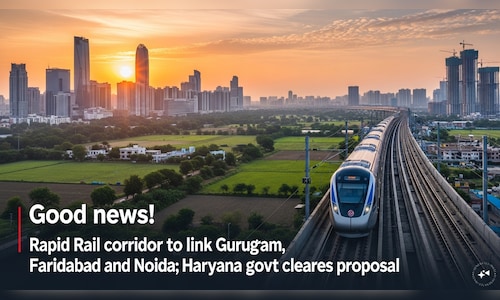
This announcement was made during the ongoing session of the Haryana Legislative Assembly, according to News18.
64 km in total: What are the routes?
The proposed corridor will cover a total distance of 64 kilometres, with 52 kilometres within Haryana.
In Gurugram, the line will begin at IFFCO Chowk and traverse through Sector 29, Millennium City, Sector 52, Sector 57, and Sector 61, eventually reaching Gwal Pahari.
At this juncture, it will intersect with the Delhi Metro’s Yellow Line, enhancing interchange options for passengers.
In Faridabad, the corridor will navigate through Sainik Colony, connecting areas including New Faridabad, NIT, Bata Chowk, and Sectors 12-15.
Read more: More than 25 Indian students face deportation as Berlin enforces visa action
The route will also link with the Delhi Metro’s Violet Line, facilitating smoother access to the national capital.
Regional connectivity boost
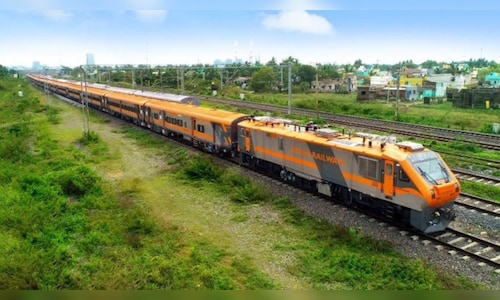
The Namo Bharat RRTS corridor aims to enhance regional transport connections across the National Capital Region (NCR).
By linking major residential and commercial areas in Gurugram, Faridabad, and Noida-Greater Noida, the initiative is anticipated to speed up inter-city travel while working in tandem with current metro and rapid transit systems.
Implementation and timeline
The National Capital Region Transport Corporation (NCRTC) will draft the Detailed Project Report (DPR) in the upcoming months, as stated by Chief Minister Saini.
Construction is slated to begin in December 2026, with an expected completion timeline of four-and-a-half years, according to News18.
“The necessary instructions have been issued to the National Capital Region Transport Corporation (NCRTC), which oversees the project’s execution,” Saini was quoted as saying by News18.
Read more: AI Summit protest: Himachal Police ‘detains’ 20-member Delhi team over ‘unauthorised’ arrests of IYC activists
This corridor will not only integrate with the Delhi Metro, Rapid Metro, and Gurugram Metro networks but will also “contribute to Prime Minister Narendra Modi’s vision of a developed India,” he added.