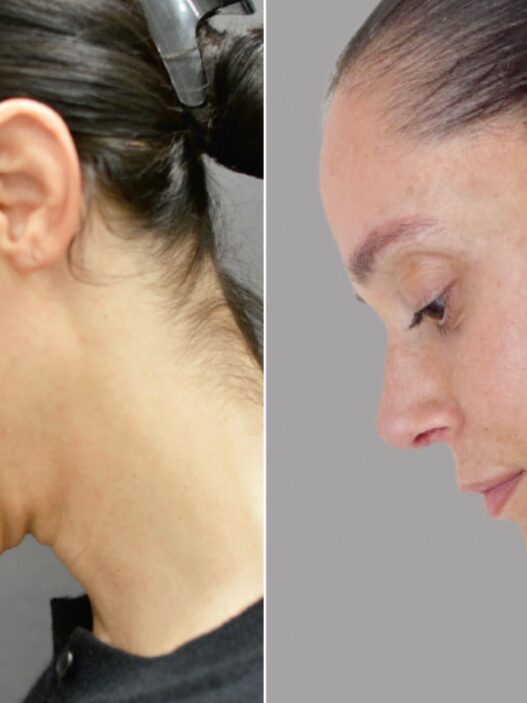







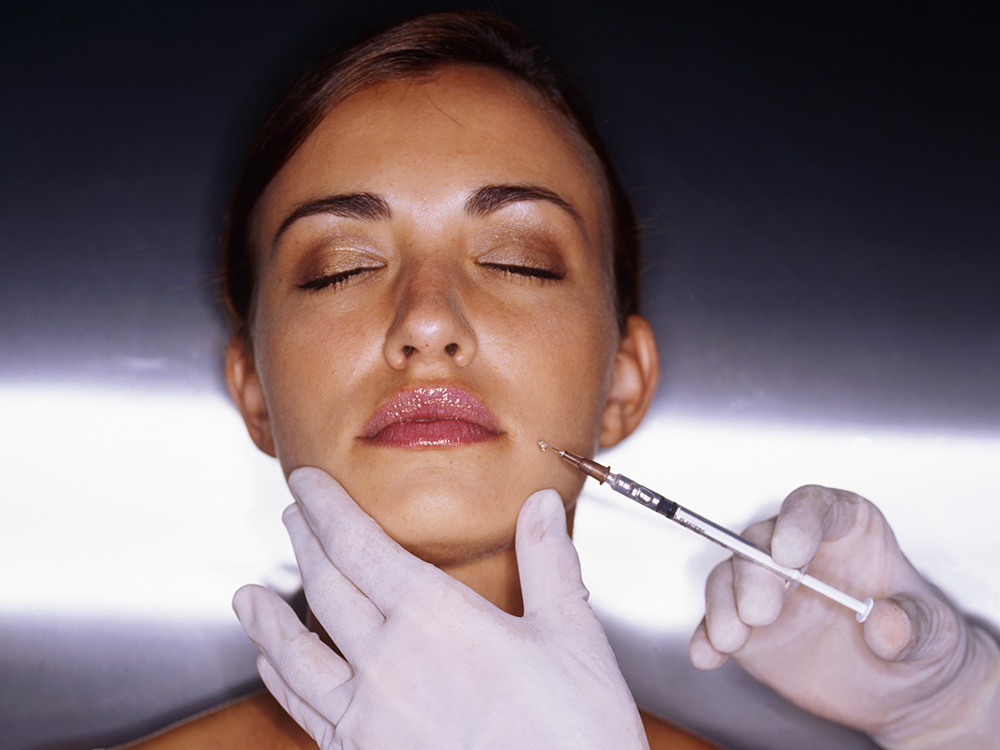
Dynamic wrinkles—the kind that deepen when you smile, laugh or speak— have long been a unique hurdle in cosmetics. Standard filler techniques don’t always work here because volume alone doesn’t fix movement-driven lines. Enter the Fern Pattern Technique. Developed in 2005 by Dutch cosmetic doctor Dr. Tom van Eijk, it was born out of frustration with the limitations of conventional filler placement, particularly around the mouth, where the skin is constantly in motion.
The technique is becoming increasingly popular today, so we asked leading dermatologists to explain everything you need to know, whether you’re just cosmetically curious or considering it for yourself.
Featured Experts
- Jacob Beer, MD is a board-certified dermatologist in West Palm Beach, FL
- Jody A. Levine, MD is a board-certified dermatologist in New York
- Julie Russak, MD is a board-certified dermatologist in New York
What Is the Fern Pattern Technique?
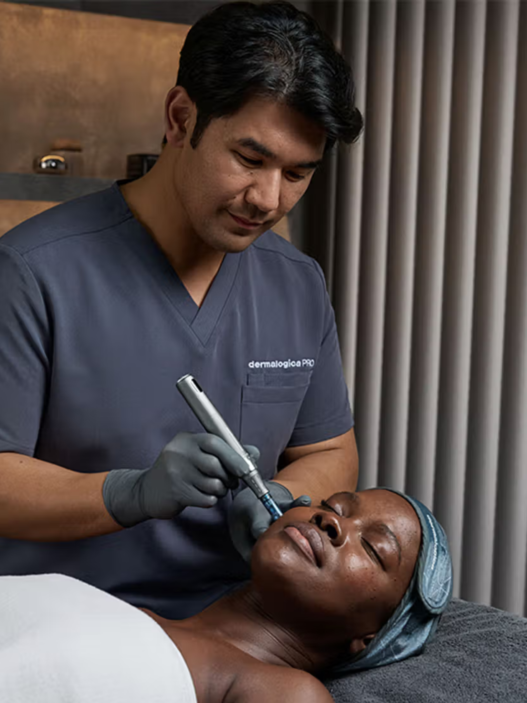
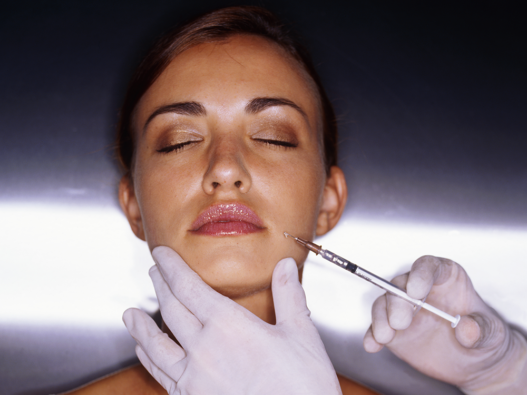
“The fern pattern technique is a way of injecting filler superficially to attempt to help with dynamic or reproducible lines,” explains West Palm Beach, FL dermatologist Jacob Beer, MD. Specifically, “these are lines that are worsened with movement, such as the smile lines or the perioral lines around the mouth,” says New York dermatologist Jody A. Levine, MD. “This technique involves injecting small amounts of filler into the superficial dermis along the line, then extending it away from the line in a pattern resembling a fern leaf.”
New York dermatologist Julie Russak, MD notes that this technique is not a volumizing approach but rather a reinforcement approach. “You’re depositing product within the skin tissue itself, at the level where structural weakness originates, not beneath it. That distinction is the entire point,” she says. “What the fern pattern technique does differently is treat the dermis as the target, not the space below it. Intradermal hyaluronic acid placed in a branching pattern activates fibroblasts and drives new collagen deposition. You’re giving weakened tissue a scaffold to rebuild against. That’s regenerative logic.”
The Benefits of the Fern Pattern Technique
“Because the hyaluronic acid is placed within the dermis rather than below it, it prompts the skin’s own fibroblasts to produce collagen and elastin. The correction outlasts the hyaluronic acid because the skin is rebuilding its own architecture in response to the treatment,” explains Dr. Russak. “The result moves naturally because you haven’t added mass underneath the tissue. And the improvement continues after the hyaluronic acid resorbs, which is not something you can say about conventional volumizing injection.”
Dr. Russak and Dr. Beer both note that generally less product is needed with this technique. The Fern Pattern Technique can be right for patients seeking improvement in superficial, dynamic wrinkles, as the hyaluronic acid forms a supportive framework for the skin, says Dr. Levine. Dr. Beer says it’s important to note that there is limited objective data on the technique’s overall benefit, as much of it is theoretical.
The Experts’ Take on the Fern Pattern Technique
All the experts are open to using the Fern Pattern Technique technique for the right patient. “I use many different injection techniques depending on the goal at hand,” says Dr. Levine. “Every patient’s anatomy, skin quality, lifestyle and aesthetic goals are different. As a dermatologist, I evaluate each patient individually and use a combination of techniques tailored to their specific wants and needs. No one technique is better or worse than another; it’s just different ways of achieving a desired result.”
Dr. Russak is a strong proponent of the fern pattern technique, believing the diagnostic reasoning behind it is sound. “Most patients present with a surface problem that is actually a structural one. The line isn’t the diagnosis. The dermal thinning that made the line possible is,” she says. “When you fill beneath a wrinkle without addressing the tissue weakness, you’re compensating for a problem you haven’t solved. The skin is less responsive than it was, and adding volume underneath doesn’t change that.”
Dr. Beer notes that the most important factor here is the practitioner’s experience. “I’ve seen countless complications from other practices where you see beading and discoloration due to injections that are too superficial, as well as migration from injections that are too deep.” He adds that “the product [i.e. Restylane versus Juvéderm] used is also very important.” Because not all hyaluronic acid fillers behave the same way, and for a technique this placement-specific, viscosity and particle size can affect both precision and outcome.