






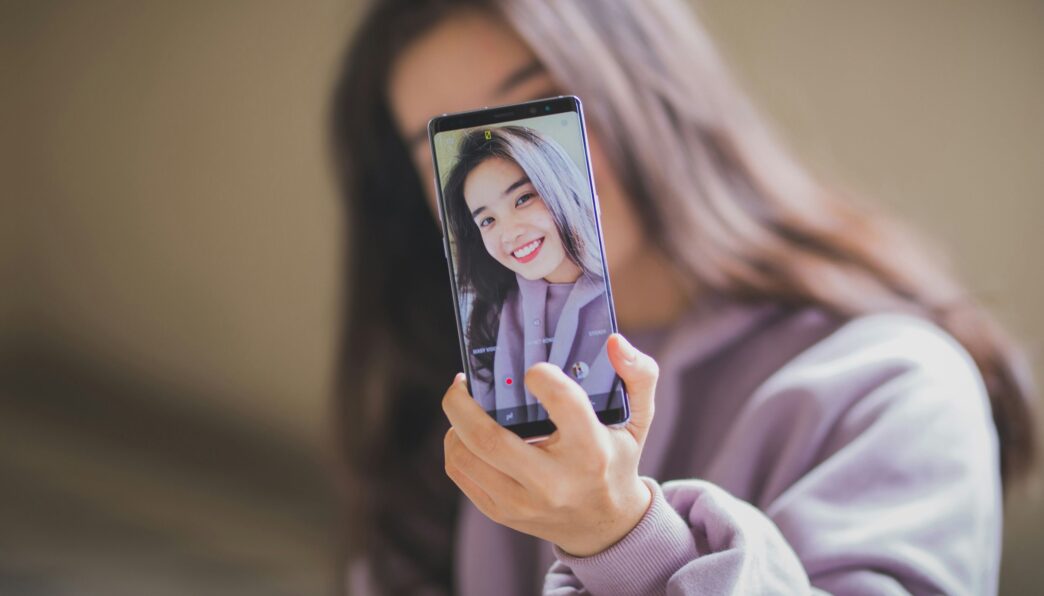
A few weeks ago, out of equal parts curiosity and professional suspicion, I did what millions of teenagers do every day: I fed my own face to one of the new AI attractiveness scanners. I took a selfie in the surgeons’ lounge, still in my white coat and mid-smile, and seconds later, it returned a verdict. My score? A 6.9 out of 10. Should I be disappointed by the low rating?
I’ll live.
In my defense, I had just finished a long surgical day, so I was a bit spent. But one thing pleased me. Of all the categories the machine graded, one stood out: its evaluation of my smile, expression and warmth. That scored an 8.6, and the app flagged it as my “defining asset,” one that “reads as trustworthy and approachable.” So why was my overall score so low? What sank me was my hairline (5.2).
The algorithm scanned surface and proportion, then concluded that the best thing about my face wasn’t structural at all. It made my argument for me, conceding that attractiveness is multidimensional and shaped by expression, movement, emotion and presence, “which a still photo cannot capture.” It tried to measure the one thing it admits it cannot see, and that was my highest score.
Can Attractiveness Be Quantified?
This booming “looksmaxxing” genre, which surged into mainstream beauty conversation in 2026, has migrated from fringe to TikTok feeds and AI rating apps. Upload a selfie, get an objective number and a beauty percentile. The promise is intoxicating, attractiveness quantified.
That premise, though, may be the problem. Over the past twenty years, across dozens of clinical trials and more than two hundred published papers, our team and I have tried to capture and define what makes a face attractive, and I’ll stake my career on this: pixels and angles are the most primitive, least interesting part of the story. The AI algorithm is grading beauty, a biological reflex, and calling it attraction. Beauty and attraction are not the same thing, and the distance between them is where my research breathes and humanity lives.
Beauty vs. Attraction
Beauty is Newtonian: flat, two-dimensional, obedient to math, symmetry and the golden ratio. A primitive signal of health, wellness and fertility, it is perceived subconsciously within a fraction of a second. And it is what the AI algorithm is trained to score.
Attraction is Einsteinian: relative, dynamic and dependent on the observer. This is where the AI beauty score collapses, because the forces that drive attractiveness cannot be captured in a still photo. In 2018, I authored a paper on the Special Theory of Relativity for Attractiveness, proposing that attractiveness comprises three pillars: physical mathematical beauty, which is what AI measures; genuineness, what most would call “naturalness,” a parameter determined by a naïve-observer evaluation scale; and self-esteem, or confidence: how one feels about oneself at a specific moment in time. When the three pillars are configured as separate axes, they create a three-dimensional cube whose measurable volume equates to attractiveness. But attractiveness requires a sender to project and a receiver to perceive. It is therefore relative to a fourth dimension: the perspective of whoever is judging.
Beauty is just one edge of this complex formula, and the least important of the pillars. In practical terms, we’ve all met the physically, mathematically perfect person who walks into a room and somehow dims it. And we’ve all met someone who wasn’t granted the most favorable genes, yet who lights up the room with charisma and energy, someone we can’t help but be drawn to and mesmerized by.
The apps are blind to the most important tenets of attractiveness. They can’t register genuineness, which comes from the involuntary micro-expressions around the eyes and mouth that tell a story in milliseconds. AI can’t see self-esteem, body movement or the ease with which a person walks into a room. All of these attributes predict attractiveness more powerfully than a jawline or a lip size.
For further proof that attractiveness escapes the calipers: in 2020, we asked visually blind individuals to rate the beauty of models who sat silently across from them. They couldn’t perceive a single ratio, yet they detected beauty as reliably as sighted raters did. Sighted people, blindfolded, lost the ability completely. How do blind people detect beauty? We surmised that beauty is primal messaging that doesn’t require the visual sense to be perceived, but is conveyed instead through other, extrasensory biofields. And if beauty can be recognized without viewing a single pixel, what chance does an AI algorithm have of determining the far more complex, neuro-aesthetically encoded value of attraction?
It’s also why “perfect” so often looks and feels wrong. A face optimized into frozen stillness, packed with excess neurotoxin and filler to satisfy the math, often tips over into the uncanny valley: human enough to register as a face, but strange enough to unsettle. “She looks unnatural,” we say. “Not like herself.” Attractiveness lives in the subtleties of presence, trustworthiness and humanness. The algorithm grades a flat snapshot. People fall for an in-depth movie.
The Danger of AI Attractiveness Tools
But here is what concerns me most.
We may be handing “objective” face scores to the population least equipped to receive them. The U.S. Surgeon General warns that teens who spend more than three hours a day on social media face roughly double the risk of depression and anxiety, and the average teen now spends about three and a half hours a day scrolling. Nearly half say it makes them feel worse about their bodies. Sixty-five percent of girls say the media holds them to a beauty standard they can’t meet. More troubling still is the way these tools can usher young teenagers toward a pathological condition known as body dysmorphic disorder (BDD), a preoccupation with a perceived flaw that hijacks daily life, with an onset typically in adolescence. BDD affects roughly two percent of the general adult population and rises to 4.2 percent among young social media users, where it is significantly associated with time spent on image-dominated social media channels like Snapchat and Instagram. And among people with BDD, about 80 percent experience suicidal thoughts, and roughly one in four attempt suicide.
Consider, too, that these apps are likely calibrated to a narrow “Western standard,” stripped of the culturally specific nuances relevant to ethnically diverse populations. And while an app may try to be gentle and positive in its evaluations and recommendations, its findings can still be misinterpreted as a ranking of human worth.
The Bottom Line
None of this is an argument against technology, or against wanting to look and feel your best; that’s my life’s work. The same report that scored me a 6.9 also gave me useful advice: a sharper haircut, sunscreen and better posture. Helpful, all of it. But notice what it could only gesture at and never measure: the warmth in my smile, which was, by its own scoring, the best thing about my face.
Facial attractiveness isn’t a math problem with one simple answer. The most attractive signal we give off is the very thing AI can’t measure: the emotional warmth in a face, the confidence in how we carry a room, the irreplaceable fact of looking like our genuine selves. If we want to measure something that matters, let’s steer the conversation away from counting millimeters and toward what people actually want: confidence, connection, mood and being the best version of ourselves.
The algorithm distilled me down to a single number, but attraction is never that simple. It’s a deeply innate, layered and embodied perception, one that can’t be captured from behind a screen, but is best found up close, in conversation with another person, in the real world.