




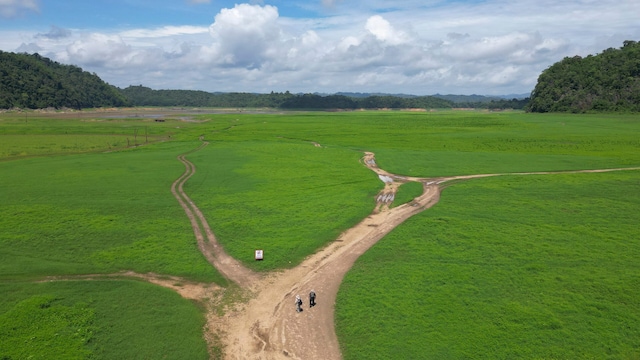
Maintenance at the Vajiralongkorn Dam led to the depletion of the hydropower facility’s reservoir, uncovering Nithe Station for the first time in over 40 years.

 1/5
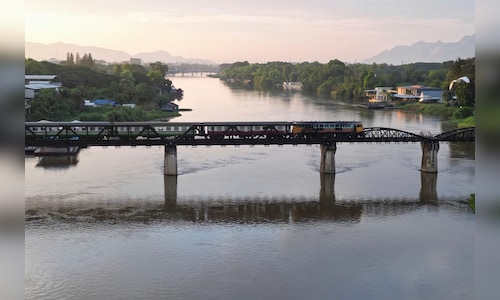
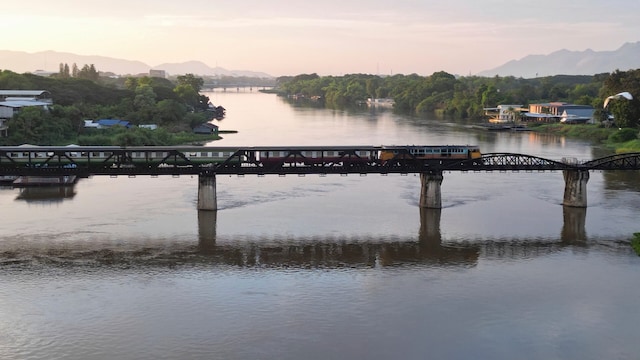
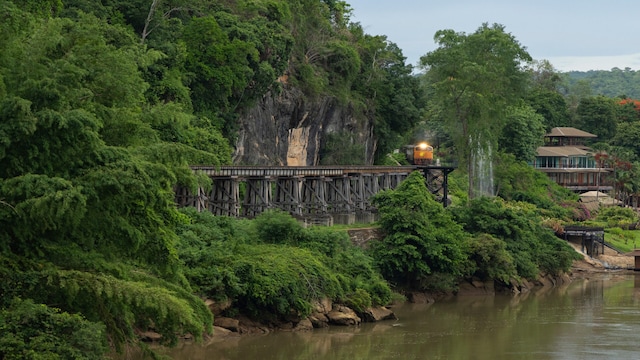
1/5Researchers are hurrying to survey the site, which served as a key depot on the historic 415-kilometer (257-mile) route linking what was once Siam and Burma, now Thailand and Myanmar. However, time is of the essence, as the dam’s maintenance is expected to conclude in August, coinciding with Southeast Asia’s rainy season, which could soon re-submerge the area. A train traverses the River Kwai Bridge, a notable segment of the infamous World War II “Death Railway,” in Kanchanaburi, Thailand, on Sunday, May 31, 2026. (AP Photo/Anton L. Delgado)
 2/5
2/5During World War II, about 60,000 Allied prisoners of war, alongside many thousands of Asian laborers, were coerced into constructing the railway by the Japanese Empire. Over 12,500 POWs and 75,000 laborers perished in the process, giving rise to the nickname “The Death Railway.” A train approaches Thamkra Sae Station, one of the remaining active sections of the notorious World War II “Death Railway,” in Sai Yok, Thailand, on Thursday, May 28, 2026. (AP Photo/Anton L. Delgado)
 3/5
3/5“We interact with many relatives of POWs. Some of these individuals worked in the area we’re focusing on, particularly at Nithe, making this a valuable chance for surveying… to inform families in the future,” stated Andrew Snow, a researcher at the Thailand-Burma Railway Centre, whose father was taken captive in Singapore in 1942 and compelled to labor on the railway. Researchers make their way into the drained reservoir where Nithe Station, a depot from World War II’s infamous “Death Railway,” has emerged in Sangkhlaburi, Thailand on Friday, May 29, 2026. (AP Photo/Anton L. Delgado)
 4/5
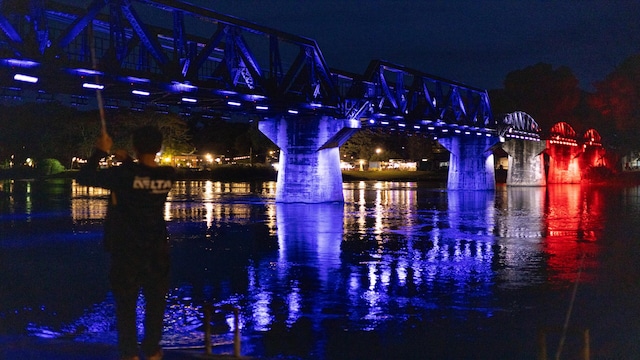
4/5Martyn Fryer, an independent researcher who has traveled to Nithe three times, made his way from Australia to witness the fully resurfaced site. His grandfather perished as a POW during the railway’s construction, and he expressed a desire to see “what infrastructure lies beneath the water.” Active sections of the historical railway continue to operate, serving both locals and attracting numerous tourists. Educational centers, such as The Hellfire Pass Interpretive Centre, also aim to preserve the railway’s history. A man fishes in front of the River Kwai Bridge, a significant part of the notorious World War II “Death Railway,” illuminated in the colors of the Thai flag in Kanchanaburi City, Thailand, on Saturday, May 30, 2026. (AP Photo/Anton L. Delgado)
 5/5
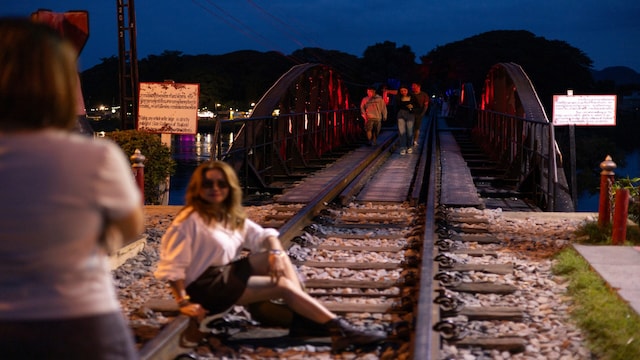
5/5Traveling offers opportunities to gain insights into the local people and culture, remarked Michael Weber, a German tourist, at Thamkra Sae Station. “And an essential part of any culture is its history.” A visitor smiles for a photograph at the River Kwai Bridge, an iconic component of the infamous World War II “Death Railway,” in Kanchanaburi, Thailand, on Saturday, May 30, 2026. (AP Photo/Anton L. Delgado)
Contributions from AP