





In response to this increasing interest, South Korea established the K-Tourism Innovation Task Force in September 2025 to enhance travel offerings centered around fans. Concurrently, the Korea Tourism Organisation (KTO) has developed a strategy to broaden K-culture tourism and motivate visitors to discover attractions beyond Seoul, thereby boosting regional tourism throughout the nation.
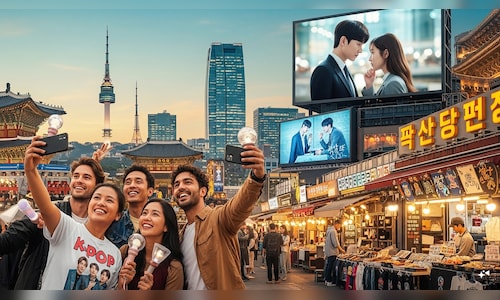
A unique feature of South Korea’s tourism scene is its fan cafe culture. These themed cafés, dedicated to K-pop idols and groups, offer signature beverages, exclusive merchandise, photo exhibitions, and fan-made decorations. They not only serve as attractions but also act as social hubs where guests can meet fellow fans from around the globe and dive into the country’s lively fandom culture.

Image: Reuters
In Seoul, Myeongdong continues to be a vital area for K-wave tourism. Famous for its concentration of K-beauty shops, entertainment merchandise stores, and lively street food options, the district remains a staple on K-culture travel agendas. Travelers often pair their time in Myeongdong with visits to traditional food markets and local cultural sites, blending modern pop culture with authentic regional experiences.
Meanwhile, Jeju Island—long favored as South Korea’s prime domestic escape due to its volcanic terrain, tangerine farms, and picturesque coastline—has seen a resurgence in interest following the success of the Netflix series When Life Gives You Tangerines. The series has become one of the top-watched shows in various countries, including Vietnam, Thailand, and the Philippines, motivating fans to visit its filming locations. In response, the Jeju Special Self-Governing Province collaborated with the Jeju Contents Agency to create themed travel routes highlighting key sites from the series.

Image: Canva
As Korean entertainment’s global popularity continues to soar, the distinction between fandom and travel is increasingly blurring. Travelers are pursuing more immersive connections with the cultures they engage with onscreen. With government-supported initiatives and regional tourism campaigns, South Korea is establishing itself as a destination where entertainment transcends mere viewing, transforming into a travel experience in its own right.
(Edited by : Priyanka Deshpande)