






The “Colosseo-Fori Imperiali” station, part of the city’s C-line, spans four levels and reaches a depth of 32 metres, showcasing a remarkable feat of modern engineering that was unveiled on Tuesday.
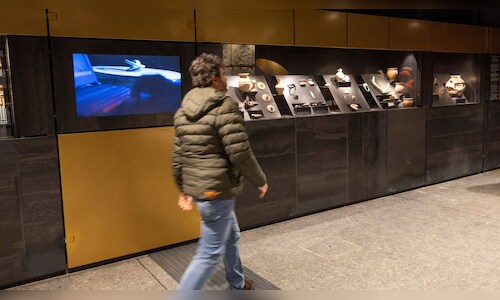
With a ticket priced at 1.5 euros, passengers can enjoy access to the station’s underground museum featuring 350 items, including ceramic jugs, lamps, bronze statuettes, and a wooden sword.
A bit further along, the remnants of a bathhouse belonging to a wealthy Roman are visible.
Also read | Instagram-worthy travel destinations: 10 places around the world that guarantee picture-perfect memories
Ancient Rome developed in layers, with temples and forums constructed atop older foundations, resulting in a captivating landscape for archaeologists.
At surface level, a triangular opening provides an unusual perspective of the Colosseum.
“The most significant achievement we have accomplished is offering a glimpse… into daily life,” said Elisa Cella, an archaeologist at the Colosseum archaeological park, during the presentation.
Extraordinary past
Rome’s mayor, Roberto Gualtieri, termed the station’s inauguration “an extraordinary and historic event”.
He also justified the lengthy and costly construction processes, which have led to significant disruption for residents and tourists over the years.
Several project delays were caused by complaints and unanticipated discoveries.
Also read | US travel ban: Trump adds more countries to entry restrictions; check full list here
“These archaeological digs and discoveries are not impediments,” he stated, describing them as an opportunity to unveil the city’s “extraordinary past”.
Due to Rome’s unique geological challenges, the excavation employed a method of “descending archaeology” specifically designed for underground stations in historic areas.
This approach entails installing interim slabs as excavations proceed from top to bottom, maintaining the stability of the structures.
Also opened on Tuesday was the Porta Metronia station, where excavations surfaced a vast military complex from the 2nd century AD, including a residence adorned with frescoes and mosaics.
This residence was carefully dismantled, restored, and reassembled in a setting for metro passengers to appreciate from an elevated walkway.
“Rome has always built over its history,” remarked Simona Morretta, head of excavations and the Porta Metronia museum.
Initiated in 2007, the development of the C line, which connects the city’s northeast and southeast, has faced considerable delays.
Once completed, it will encompass 31 stations over a span of 29 kilometres.
(Edited by : Jerome Anthony)