



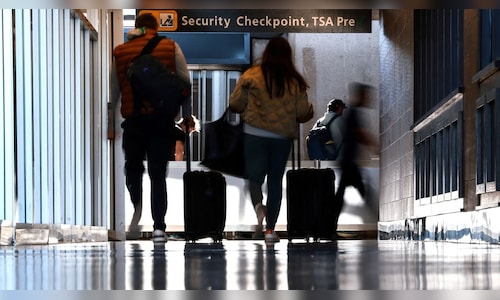
This new policy was revealed on Friday by the US Centers for Disease Control and Prevention (CDC), indicating a notable tightening of entry regulations.
CDC Reinforces Ebola Restrictions
According to the updated directive, lawful permanent residents—often referred to as green card holders—who have been in the DRC, Uganda, or South Sudan in the last 21 days will be temporarily prohibited from entering the US.
Previously, US citizens, nationals, and green card holders were exempt from a broader 30-day Ebola-related entry restrictions. However, the CDC stated that the evolving situation of the outbreak warranted extra measures to avert the virus from entering the nation.
“Utilizing this authority for lawful permanent residents for a limited timeframe strikes a balance between safeguarding public health and managing emergency response resources,” the agency said in a statement.
Traditionally, green card holders have been exempt from restrictions on entering the United States, including former President Donald Trump’s various travel bans and the CDC’s COVID-era orders.
WHO Elevates Global Alert
This decision followed the World Health Organization (WHO) elevating the risk level of the rare Bundibugyo strain of Ebola to ‘very high’ and declaring the Ebola outbreak in the DRC and Uganda an emergency of international concern.
“We are currently updating our risk assessment to very high at the national level, high at the regional level, and low at the global level,” said WHO Chief Tedros Adhanom Ghebreyesus.
Parthesarathy Rajendran, Executive Director of Médecins Sans Frontières (MSF) South Asia, noted that the ongoing outbreak is ‘deeply concerning’ due to its involvement with the Bundibugyo strain of Ebola, a rarer variant for which there is no approved vaccine or targeted treatment.
Since the outbreak was officially recognized on May 15, the DRC has reported over 500 suspected cases and more than 130 fatalities, with incidents spreading across multiple provinces and moving into Uganda.
MSF Alerts on Escalating Crisis
Rajendran cautioned that delayed detection and fragile healthcare systems exacerbate the crisis. He remarked that the outbreak was identified late and is proliferating in regions already burdened by conflict, displacement, and insufficient medical infrastructure, making this outbreak ‘especially perilous’.
“At Doctors Without Borders, MSF, this marks our 17th Ebola intervention. We are rapidly escalating emergency support in collaboration with health authorities, deploying skilled Ebola specialists, medical teams, logisticians, and essential supplies to affected regions,” Rajendran added.
MSF reported that over 50 people had died by early April, prior to the official declaration of the outbreak in mid-May.
Lack of Approved Vaccine or Treatment
The Bundibugyo strain poses distinct challenges compared to previous Ebola outbreaks. Current Ebola vaccines are authorized solely for the more common Zaire strain and are not validated for use in Bundibugyo virus cases.
Likewise, existing monoclonal antibody treatments developed during past Ebola outbreaks have not received approval for this strain. Despite the existence of antiviral candidates and experimental monoclonal antibodies, their efficacy remains undetermined, according to the MSF report.
In the absence of a targeted vaccine or treatment, healthcare workers rely primarily on supportive care, which includes fluid replacement, oxygen therapy, symptom management, and monitoring of blood and cardiac parameters.
Past Bundibugyo outbreaks have shown fatality rates ranging from 25 to 40%.
Testing Kit Shortages Hinder Detection
The report indicates that one of the significant challenges in addressing the outbreak is the scarcity of rapid diagnostic capacity for the Bundibugyo strain of Ebola. PCR tests needed to confirm infections require specific diagnostic kits, which are currently in short supply. This deficit has considerably delayed confirmation of suspected cases, hindering essential response actions such as contact tracing and patient isolation.
Outbreak Widespread Across DRC and Uganda
MSF reported receiving alerts on May 9 and 10 concerning an increasing number of deaths in the Mongwalu health zone located in Ituri province, northwest of Bunia. Cases were subsequently identified in the Bunia and Rwampara health zones before spreading into the neighboring province of North Kivu, including the regional capital Goma, indicating a broader territorial expansion.
Ugandan health authorities confirmed the nation’s first Ebola-related death on May 14. In response to the rapidly evolving circumstances, the World Health Organization activated its highest emergency alert level on May 17.
17th Ebola Outbreak
This represents the 17th recorded Ebola outbreak in the DRC since the virus was first discovered in 1976 and the third outbreak specifically involving the Bundibugyo strain.