Barcelona in November
7 October 2026, 3 min read
November is a good month to visit Barcelona for travelers who prefer milder weather and fewer crowds. It suits those who want to explore the city at a relaxed pace without the intensity of peak season.
The Weather in November
November brings a high of 19 degrees Celsius (66 Fahrenheit) and a low of 10 degrees Celsius (50 Fahrenheit) to Barcelona. This is noticeably cooler than the summer months, when temperatures climb to 30 degrees Celsius (86 Fahrenheit) in August and 29 degrees Celsius (84 Fahrenheit) in July. Compared to the coldest month of January, when the high reaches only 15 degrees Celsius (59 Fahrenheit), November sits in the middle of the annual range.
Rainfall measures around 61 millimetres for the month, with humidity at 74 percent. The city receives approximately 9.6 hours of daylight, a significant drop from the 15 hours available in June. Visitors should expect overcast conditions and plan for wet weather, though sunny spells still occur regularly.
The water remains too cool for swimming, and evenings can feel quite cold. However, the climate is far more comfortable for sustained walking than in the height of summer, when the heat can be exhausting.
What November Feels Like
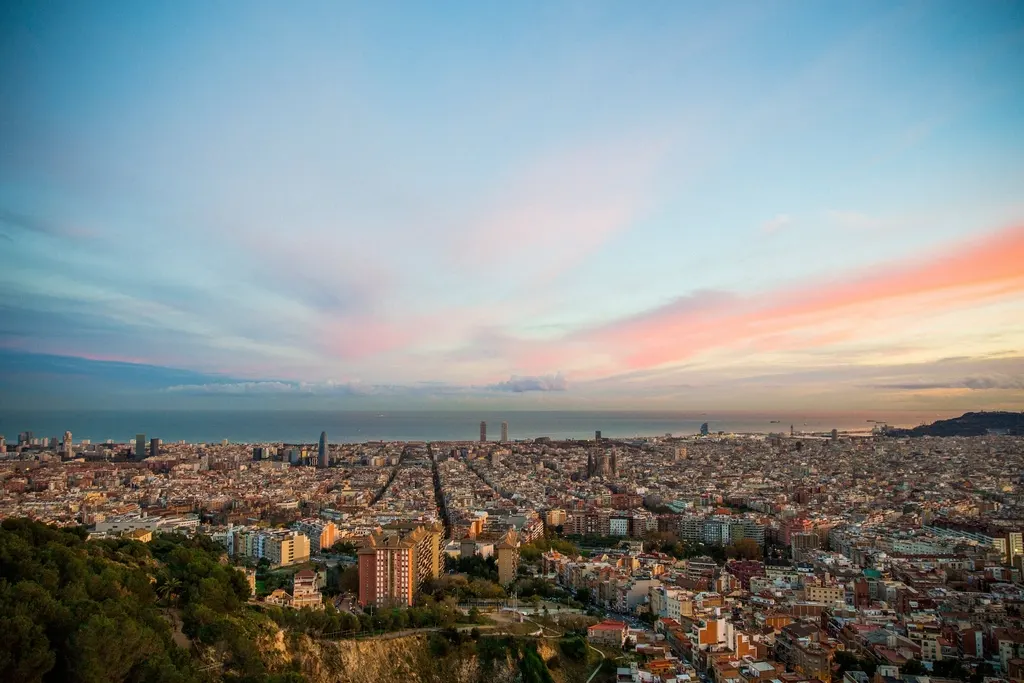
The city moves at a calmer pace in November. Tourists no longer crowd the major avenues, and waiting times at popular attractions are generally shorter. La Rambla, the famous street running through the city centre, becomes a more pleasant place for a stroll without the dense summer foot traffic.
All Saints Day falls on November 1st. Some shops and businesses close for this public holiday, which may affect opening hours on that day. Museums and major attractions typically remain open, but it is worth checking schedules in advance. The atmosphere around the city remains civic and orderly rather than festive.
With only 9.6 hours of daylight, the mornings arrive later and the afternoons fade earlier. This shifts how visitors structure their days, making early starts and indoor activities more relevant as dusk approaches by mid-afternoon.
What to See
The Basilica and Expiatory Church of the Holy Family, built in 1882, is a landmark that works well in cooler weather. The exterior details are best appreciated without the glare of summer sun, and the interior temperature is more bearable for a longer visit. November crowds at this site are thinner than in peak season.
Park Güell, the sculpture garden designed by Antoni Gaudí, offers extensive outdoor space to explore at a comfortable pace. The cooler air makes walking through the gardens and terraces pleasant rather than taxing. Shade and rest spots are available throughout the grounds.
Casa Milà, built in 1906, and Casa Batlló, built in 1877, are two residential buildings by Gaudí that showcase his distinctive architectural style. Both have interior spaces that are enclosed and climate-controlled, making them suitable for visiting when rain is likely. The rooftop terraces of these buildings provide views of the city without the overheating that occurs in summer.
The Palau de la Música Catalana is a concert hall worth considering for an evening performance. Indoor venues are particularly appealing in November when the weather turns damp and the limited daylight makes outdoor sightseeing less practical.
Planning Your Days
A relaxed pace suits Barcelona in November. The shorter daylight hours mean that outdoor sightseeing is best concentrated in the middle of the day. Mornings can be used for neighbourhood walks or coffee stops, and evenings work well for indoor dining, performances, or revisiting attractions that are illuminated after dark.
Rain should be anticipated rather than treated as a surprise. Carrying a compact umbrella and waterproof layers allows for continued movement through light showers. When heavier rain occurs, museums, churches, and indoor markets provide clear alternatives.
The cooler evenings require a layer beyond what is comfortable during the day. Visitors who plan to dine outdoors or walk along the waterfront after sunset should bring warmer clothing than what they wore during daytime sightseeing.
Practical Notes
The currency in Barcelona is the euro. Cash machines are widely available, and contactless payment is accepted at most restaurants, shops, and transport stations. It is useful to carry some small notes for markets and smaller establishments.
The official language is Spanish, though Catalan is also widely spoken. In tourist areas, English is commonly understood. Learning a few basic phrases in Spanish is appreciated by locals and helpful in more residential neighbourhoods.
Dressing for November means layers. A light jacket or coat over a sweater handles the daytime temperatures, while a warmer outer layer is needed after sunset. Comfortable walking shoes with good grip are important given the possibility of wet cobblestones on streets like La Rambla and in older neighbourhoods.
What to pack
- A light waterproof jacket that packs down small
- Layers including a warm sweater or fleece
- Comfortable walking shoes with waterproof soles
- A compact umbrella for unexpected rain
- A reusable water bottle for daytime walks
Questions
Is November a good time for beach activities in Barcelona?
No. The water temperature is too cool for swimming, and the beach atmosphere is quiet. November is better suited for urban sightseeing than beach visits.
Will rain ruin my plans for outdoor sightseeing?
Not necessarily. Light rain allows for continued movement with an umbrella. Heavy rain can be managed by shifting to indoor attractions such as Casa Batlló or the Cathedral of the Holy Cross and Saint Eulalia.
How crowded are the main tourist sites in November?
Crowds are significantly reduced compared to summer. The Basilica and Expiatory Church of the Holy Family, Park Güell, and La Rambla are all noticeably quieter, allowing for a more unhurried experience.