India’s affluent are transforming their spending habits—discover the details.
2 July 2026, 3 min read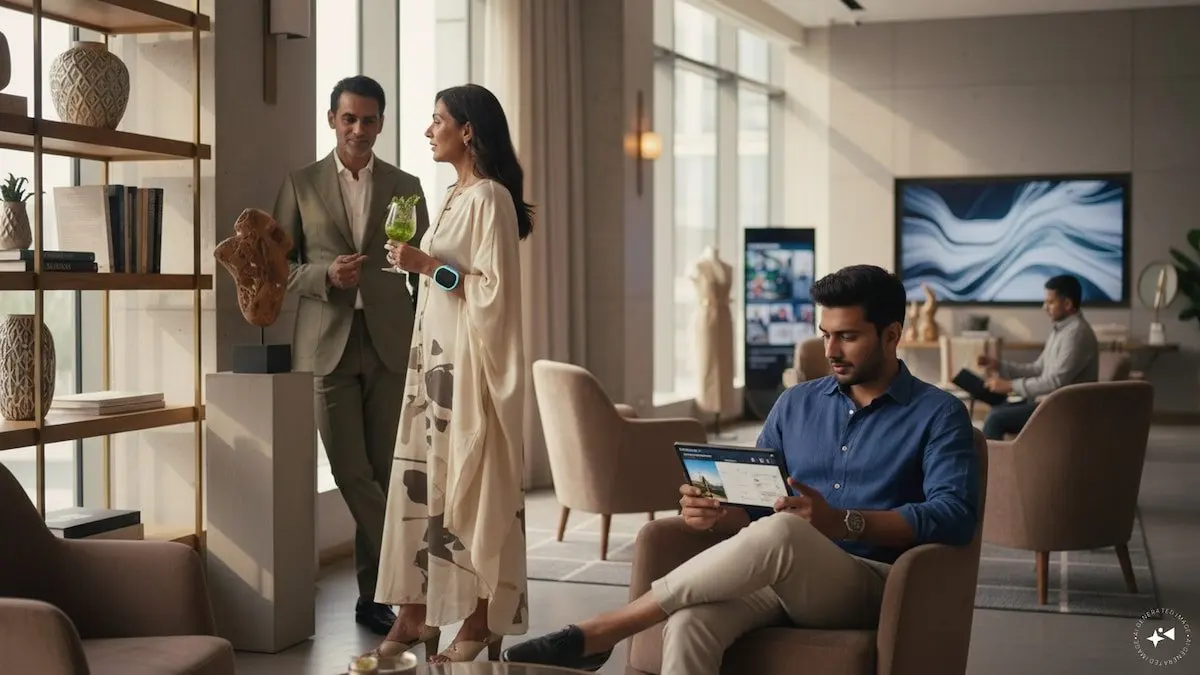
According to Visa Consulting & Analytics’ *India’s Affluent Economy 2025-26* report, travel constitutes 58% of discretionary spending among India’s ultra-elite, far surpassing luxury retail and other sectors.
The study also reveals a rising inclination towards privacy, exclusivity, and customized experiences over ownership-focused luxury.
This trend is clearly manifesting within India’s luxury hospitality and travel landscape.
Luxury providers indicate that affluent Indian families are traveling in larger groups, extending their stays, and focusing on shared experiences with multiple generations—grandparents, parents, and children—rather than conventional luxury holidays.
“Travel has transformed into a means for meaningful family connections and collective experiences, rather than just leisure,” stated Yeshi Phuntsho, CEO of ÀNI Private Resorts, the first collection of dedicated private luxury resorts.
He noted that Indian families are choosing exclusive-use accommodations and frequently traveling with extended family, leading to larger gatherings and longer trips.
Varun Bajaj, Founder of Amrit Bhawan in Haridwar, a heritage boutique retreat, explained that affluent families now seek locations that provide “shared experiences, privacy, and authenticity instead of material extravagance,” as many travelers appreciate cultural richness and quality time together.
This trend is supported by wider travel sentiment research.
Allianz Partners’ *Global Travel Confidence Index 2026* indicated that 87% of Indians are planning a holiday this year, significantly higher than the global average of 74%. The report also highlighted that 68% of Indians intend to spend more on luxury travel experiences, compared to a global figure of 34%.
Experts emphasize that wealthy travelers are gravitating away from traditional hotel accommodations to private villas, buyouts, and fully personalized group travel experiences.
“There’s a notable rise in multi-generational holiday packages among HNIs and UHNIs, where family groups are preferring private homes over standard hotels,” remarked Ritwik Khare, Founder & CEO of ELIVAAS, a tech-driven hospitality and property management company.
He highlighted that privacy, exclusivity, and bespoke services have become central to luxury travel preferences.
Industry experts assert that the pandemic has accelerated this shift by redefining how affluent travelers perceive luxury itself.
“Luxury is no longer solely tied to grand architecture or lavish interiors,” observed Shilendran M, Vice President–Sales at CGH Earth, a family-run, eco-luxury hospitality group in Kochi, Kerala.
“Travelers are now putting a premium on exclusive access, authenticity, and personalized interactions with local culture, nature, and heritage.”
Many hospitality brands report that the demand for exclusive resort buyouts is driven by milestone celebrations, family gatherings, and the desire for uninterrupted quality time.
Rajiv Mehra, General Secretary of the Federation of Associations in Indian Tourism & Hospitality (FAITH), the leading private-sector policy think tank representing the Indian tourism, travel, and hospitality industry, noted that affluent families prefer “exclusive villas or resorts designated solely for their use,” offering flexibility, privacy, and bespoke experiences.
At the same time, luxury travel companies indicate a shift in affluent consumer spending, which now focuses more on emotional value rather than visible displays of wealth.
“Today, uninterrupted family connection is the ultimate luxury,” stated Bruno Courbet, Director of Club Med, a travel and tourism operator.
He pointed out that affluent Indian families prioritize collective memories and meaningful shared experiences over material goods.
Ruchi Kohli, Chief of Experience at Away&Co, a luxury travel curation agency, remarked that the most significant change is that wealthy travelers are investing in moments that “their families will cherish for years,” whether through private vineyard dinners, exclusive museum visits, or tailored wellness retreats.
Experts in the industry suggest that this evolution reflects a broader shift in affluent consumption, where luxury is assessed in terms of time, privacy, access, and personalization rather than mere ownership.