More than just a transit hub: Bengaluru airport leverages art to enhance passenger interaction.
28 April 2026, 2 min read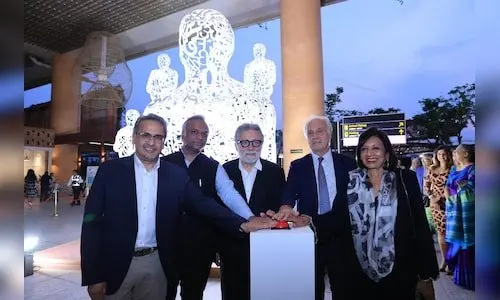
This installation not only embodies the city’s cultural heritage but also aligns with a larger goal of improving passenger experience to foster engagement.
In an interview with CNBC-TV18, Hari Marar, Managing Director and CEO of Bangalore International Airport Limited, stated that modern airports aim to offer diversified engagement opportunities beyond just punctual flight departures.
“The role of an airport extends beyond ensuring timely departures, aiming instead to make the journey meaningful,” he explained, noting that these experiences can vary from shopping and dining to a deeper cultural interaction with art.
Marar mentioned that art can alleviate passenger anxiety, a significant aspect of travel, which may indirectly encourage increased spending.
“By reducing anxiety and providing calming experiences through art, we could enhance non-aeronautical income, although that isn’t the primary focus,” he stated.
Non-aeronautical revenue has become an essential profitability driver for airports worldwide, contributing substantially through retail, food and beverage, and various passenger services.
India’s infrastructure policy supports investments in art as well. Government guidelines mandate that large infrastructure projects allocate approximately 1% of their costs for art. For a ₹10,000 crore project, this represents a ₹100 crore budget, emphasizing the magnitude of these initiatives.
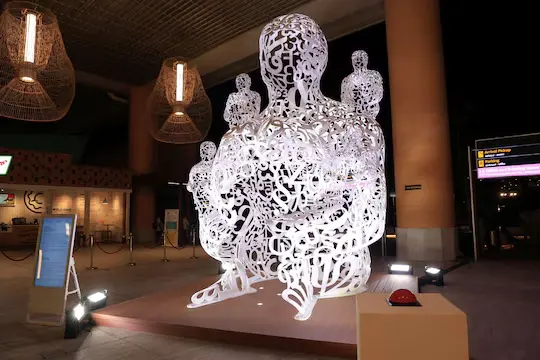
At Bengaluru airport, the art programme features both established and emerging talents, with support from institutions like the Karnataka government and corporate partnerships such as the Biocon Foundation.
Kiran Mazumdar-Shaw, Chairperson of Biocon, noted that public art contributes to more liveable and culturally vibrant urban areas.
This installation arrives at a time when airports around the globe are competing to enhance passenger experiences and branding, with art, architecture, and design serving as vital differentiators.
Bengaluru airport has ascended to fifth place in Skytrax’s World’s Best Art in the Airport rankings for 2026.
Plensa, recognized for his large-scale public projects in cities like Chicago, London, and Tokyo, referred to airports as significant hubs of connection.
“An airport is the border that links one place to the world,” he remarked, noting that the installation employs language as a metaphor for identity and human interaction.
For airport operators, the approach is decidedly practical: while art might not directly boost sales, it is increasingly regarded as integral to a wider strategy aimed at lengthening dwell time, enhancing passenger comfort, and fostering non-aeronautical revenue growth over time.