





Artificial intelligence (AI) has quickly become the newest consultant for, well, pretty much everything, including, you guessed it, beauty. Whether you’re wondering which retinol to buy, how to build a skin-care routine or whether a mysterious rash could be eczema, AI tools can generate answers in seconds. But when it comes to your skin and overall health, how much trust should you actually place in those recommendations?
Janine Hopkins, MD, a board-certified dermatologist in Monroe, LA, and Southlake, TX, and founder of Hopkins Dermatology & Hopkins Institute of Skin Health & Wellness, has seen the trend firsthand among her patients. “They’re no longer just Googling skin care. They’re asking AI,” she says. “They’ll come into my office and say, ‘I asked ChatGPT what routine I should be using,’ or ‘AI told me this spot was probably eczema.’”
While AI can be a helpful starting point, dermatologists caution that its recommendations are only as reliable as the information it receives and cannot replace an in-person evaluation. Ahead, experts weigh in on the strengths and limitations of using AI for your beauty and wellness routine, plus how much you can really trust it with your skin and health.
Benefits of AI for Your Beauty and Health
When Estée Lauder’s Voice-Enabled Makeup Assistant app debuted in 2023, it was designed to provide detailed makeup feedback for people who are visually impaired. Its AI scans a user’s face and identifies issues such as smudged lipstick or uneven application.
“How an AI is trained is really critical,” Lamia Drew, Estée Lauder’s global director of inclusive technology and accessibility, explains. “When creating VMA, we used thousands of images all across the Fitzpatrick scale to train the AI so that it could be capable of analyzing any face. That means accounting for diversity, skin tones and face shapes across the board. By the time we had a product to test, we had used another 50,000 images to help fine-tune the algorithm.”
AI-generated content can also help spread awareness. “AI can be used positively to increase awareness in our field,” says Tucson, AZ plastic surgeon Raman Mahabir, MD. “We used it to create a poem about DIEP flap breast reconstruction, and it did an outstanding job. We then used that AI-generated poem as part of our Breast Reconstruction Awareness Day campaign.”
AI can also be a useful educational tool. “If someone wants to understand the difference between retinol and retinal, vitamin C and niacinamide or why sunscreen matters every day, AI can explain those concepts beautifully,” says Dr. Hopkins. It may also help users build a basic skin-care routine or familiarize themselves with ingredients, procedures and treatment options before a dermatology appointment.
“I actually think this is a positive change,” she says. “Patients are becoming much more engaged in their skin health. They arrive asking better questions. The important thing is understanding where AI is helpful—and where it reaches its limits.”
Where AI Falls Short for Beauty and Health
AI is much less reliable when it comes to diagnosing conditions. Dr. Hopkins cautions against confusing image recognition with medical expertise. “It’s getting surprisingly good, but ‘good’ doesn’t always mean ‘right,’” she says.
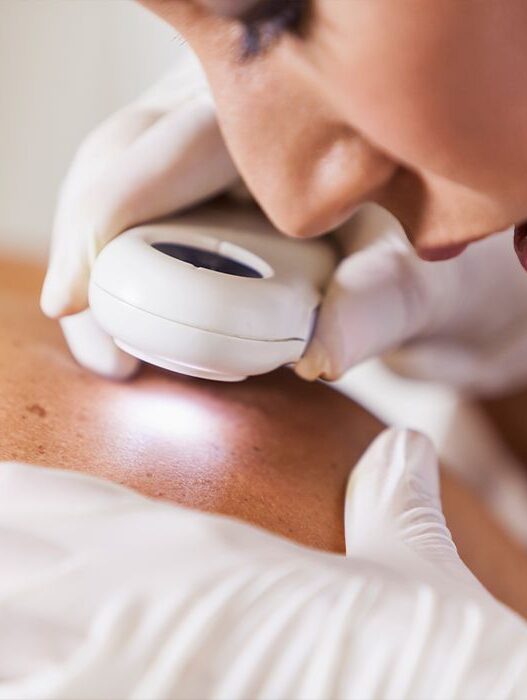
After all, a photograph tells only part of the story. “When I evaluate a patient, I’m thinking about far more than what I see,” she explains. “I’m considering their age, medical history, medications, family history, skin type, how long the problem has been there, whether it’s changing, whether it’s painful or itchy and what the rest of their skin looks like. That’s clinical judgment developed over decades of experience.”
Two conditions may appear nearly identical in a photo but require completely different treatment plans. AI may help users arrive at an appointment better informed, but it should not be relied on for a diagnosis.
Beauty Questions AI Should Never Answer
“The biggest risk is believing it with too much confidence,” says Dr. Hopkins. “AI is designed to sound certain, even when there isn’t a clear answer.” She also urges caution when AI ventures into prescription territory. “Prescription medications require an understanding of the whole patient—not just the skin,” she says. “AI simply doesn’t know enough about you to make those decisions safely.”
While AI may be able to explain how lasers work or compare injectable treatments, Dr. Hopkins says it should never be used for “any urgent medical concern or suspicious changes in skin lesions.”
This includes:
- A changing mole
- A lesion that’s bleeding
- A sore that won’t heal
- A rapidly growing bump
- A widespread rash accompanied by fever
“Those aren’t questions for AI,” says Dr. Hopkins. “Those are questions for your dermatologist.”
The same caution applies to cosmetic procedures. AI can explain what neurotoxins, fillers or lasers can do, but it cannot determine whether someone is an appropriate candidate or which treatment may be safest for their skin.
“While AI filters may be driving an increase in demand for plastic surgery, they are also driving somewhat unrealistic expectations,” says Dr. Mahabir. “We spend more time managing expectations now than before as a result.” That additional time can ultimately change a patient’s perspective. “Even when they come in asking for a ‘filter-like’ result, once you educate them and really spend the time with them, they realize they don’t really want to look fake, which is often the end result when you try to recreate an AI filter on a real person.”
How to Tell if an AI Recommendation Is Safe and Credible
How can you tell whether to trust an AI recommendation? “One of the easiest ways is to ask yourself whether it’s teaching you or diagnosing you,” says Dr. Hopkins. “If AI is helping you understand ingredients or explaining treatment options, that’s incredibly valuable. If it’s confidently telling you exactly what your diagnosis is from one photograph, I’d encourage a healthy dose of skepticism.”
The Future of AI in Beauty and Health
Rather than replacing dermatologists, Dr. Hopkins believes AI will become another tool in modern medicine. “I don’t see AI as something physicians should fear. I see it as another tool,” she says. “Throughout my career, I’ve embraced technologies like high-resolution ultrasound, advanced laser systems and artificial intelligence because they help us care for patients better.”
Still, technology cannot replace clinical experience. “The future of medicine isn’t AI replacing physicians,” she says. “It’s physicians who know how to use AI wisely delivering even better care.”