






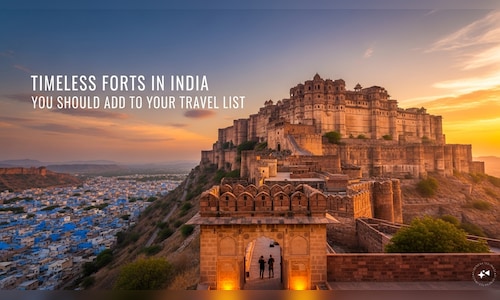
The majestic forts of India stand as enduring symbols of history, royal legacy, and architectural excellence. From the iconic Mughal Red Fort to the scenic Taragarh Fort in Rajasthan, these historical gems provide a window into the country’s vibrant cultural tapestry, making them ideal destinations for both history aficionados and travel lovers.
3 Min Read

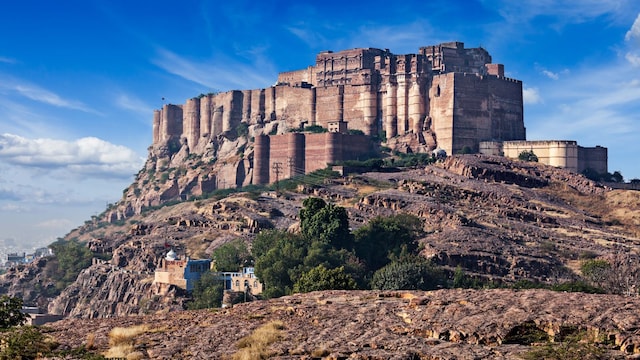
 1 / 6
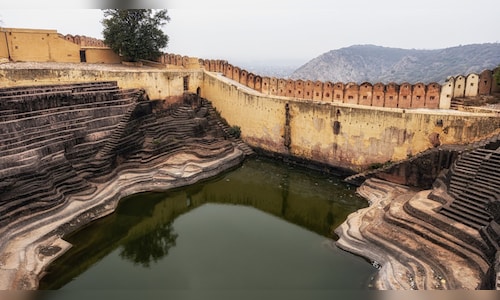
1 / 6The forts of India are not merely historical sites; they embody centuries of regal history, magnificent architecture, and transforming empires. From lofty strongholds to historic colonial forts, these sites draw visitors eager to delve into the nation’s illustrious past. Here are five essential forts in India that should be included in your travel itinerary. (Image: Canva)
 2 / 6
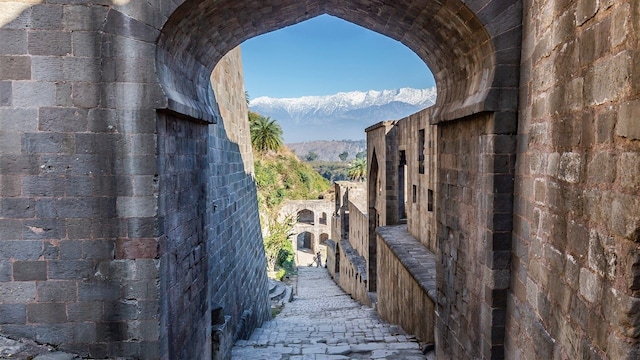
2 / 61. Kangra Fort, Himachal Pradesh | Situated about 20 km from Dharamshala, Kangra Fort is regarded as one of the oldest forts in the Himalayas. It is associated with the ancient Katoch dynasty, believed to have its roots in the Trigarta Kingdom. Crafted from local stone and sandstone, this grand edifice has seen domination by the Mughals, Sikhs, and the British throughout its history. Currently protected by the Archaeological Survey of India, the fort provides breathtaking vistas of the encircling hills and valleys.
 3 / 6
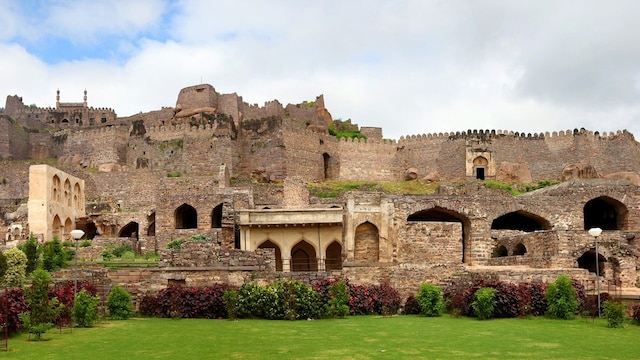
3 / 62. Golconda Fort, Hyderabad | Initially erected by the Kakatiya dynasty in the 12th century, Golconda Fort underwent expansion by the Bahmani rulers and the Qutb Shahi dynasty from the 14th to the 17th centuries. This fort became a pivotal hub for trade, culture, and governance, particularly during the peak of Hyderabad’s diamond trade. Its construction exhibits a blend of Persian, Islamic, and Hindu styles, highlighted by mounted cannons, drawbridges, and the prominent Fateh Darwaza.
 4 / 6
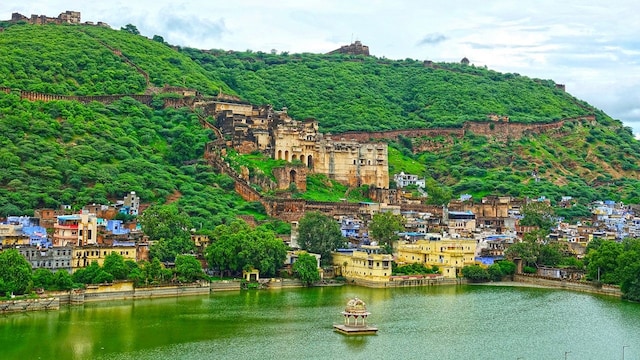
4 / 63. Taragarh Fort, Bundi | Nestled atop a steep hill overlooking Bundi, Taragarh Fort is one of Rajasthan’s oldest strongholds. Its origins trace back to the Hada Chauhan Rajputs, with significant construction and expansion occurring between the 13th and 14th centuries. Throughout its history, the fort has been the site of many conflicts involving Rajput leaders, the Mughals, and later, the British. It is renowned for its intricate system of tunnels and reservoirs that were historically employed during battles and emergencies.
 5 / 6
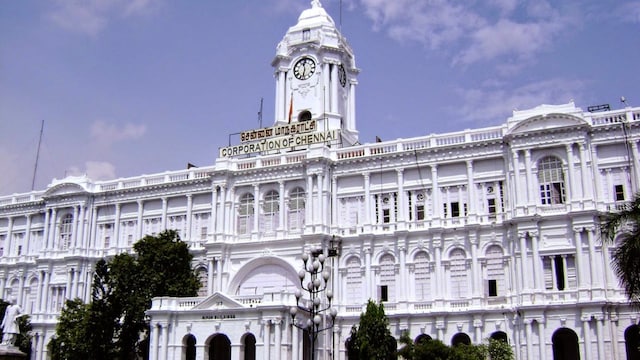
5 / 64. Fort St. George, Chennai | Constructed in 1644, Fort St. George holds the distinction of being the first English fortress in India, later serving as the headquarters of the East India Company in the southern region. The fort significantly influenced Chennai’s development during the colonial period. Key attractions within the compound include St. Mary’s Church, recognized as India’s oldest surviving Anglican church, the Fort Museum, and Clive House.
 6 / 6
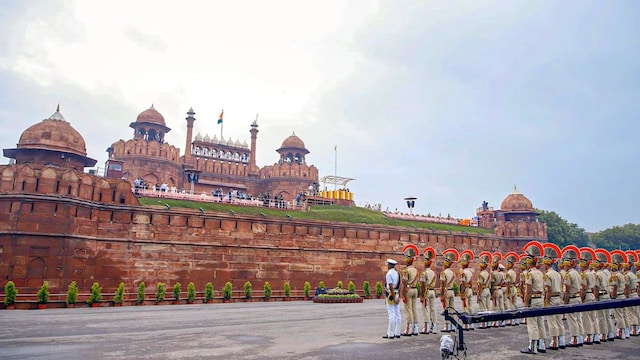
6 / 65. Red Fort, Delhi | Erected in 1639 by Mughal emperor Shah Jahan after relocating his capital from Agra to Delhi, the Red Fort became the epicenter of Mughal authority for nearly two centuries. Designed by architect Ahmad Lahori, the fort amalgamates Persian, Timurid, and Indian architectural styles. In 1947, Jawaharlal Nehru unfurled the Indian tricolor at Lahori Gate, marking India’s Independence. Recognized as a UNESCO World Heritage Site in 2007, the fort remains one of the nation’s most frequented landmarks.