






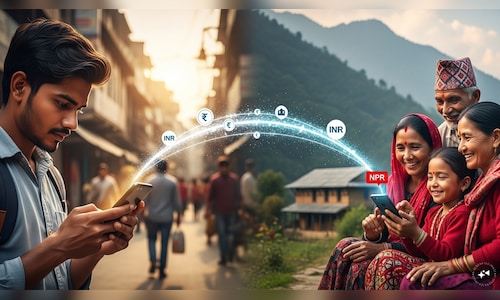
The service was launched by NPCI International Payments Ltd. (NIPL), the global branch of the National Payments Corporation of India, in collaboration with Nepal Clearing House Ltd. (NCHL). This system connects India’s Unified Payments Interface (UPI) with Nepal’s National Payments Interface (NPI).
This linkage facilitates person-to-person (P2P) transfers, currently accessible through select banks, with plans to extend the service to additional financial institutions in the future.
For users, the main advantage is the added convenience. Indians sending money to family in Nepal can now easily transfer funds using the recipient’s mobile number or VPA. In the same vein, Indian users in Nepal can send money back to India using UPI IDs. Transactions are conducted in real-time, minimizing delays typically associated with traditional remittance services.
This development is particularly noteworthy given the strong economic and social connections between the two neighboring nations. Numerous workers, students, and families frequently transfer money across the India-Nepal border, often depending on remittance services for household needs, educational expenses, and emergency assistance.
According to NPCI International and NCHL, the new payment corridor aims to provide a secure, transparent, and cost-effective alternative to traditional cross-border transfers. By integrating the swift payment systems of both countries, this initiative aspires to enhance financial inclusion while alleviating challenges in cross-border transactions.
Additionally, the launch brings Nepal into the expanding network of nations where India’s digital payment framework is being synchronized with local systems. In recent years, UPI has broadened its international presence through payment acceptance and cross-border payment collaborations across various markets.
The India-Nepal connection is expected to assist individuals who rely on timely remittances by facilitating instant fund settlements, while decreasing the necessity for sharing sensitive banking information. Officials from both organizations stated that this project could serve as a prototype for future interoperable real-time payment systems between countries.
The service is currently operational via participating banks, with wider accessibility anticipated as more institutions join the network.