India Debuts Its First Hydrogen-Powered Train, Yet Experts Anticipate Limited Adoption
17 July 2026, 5 min read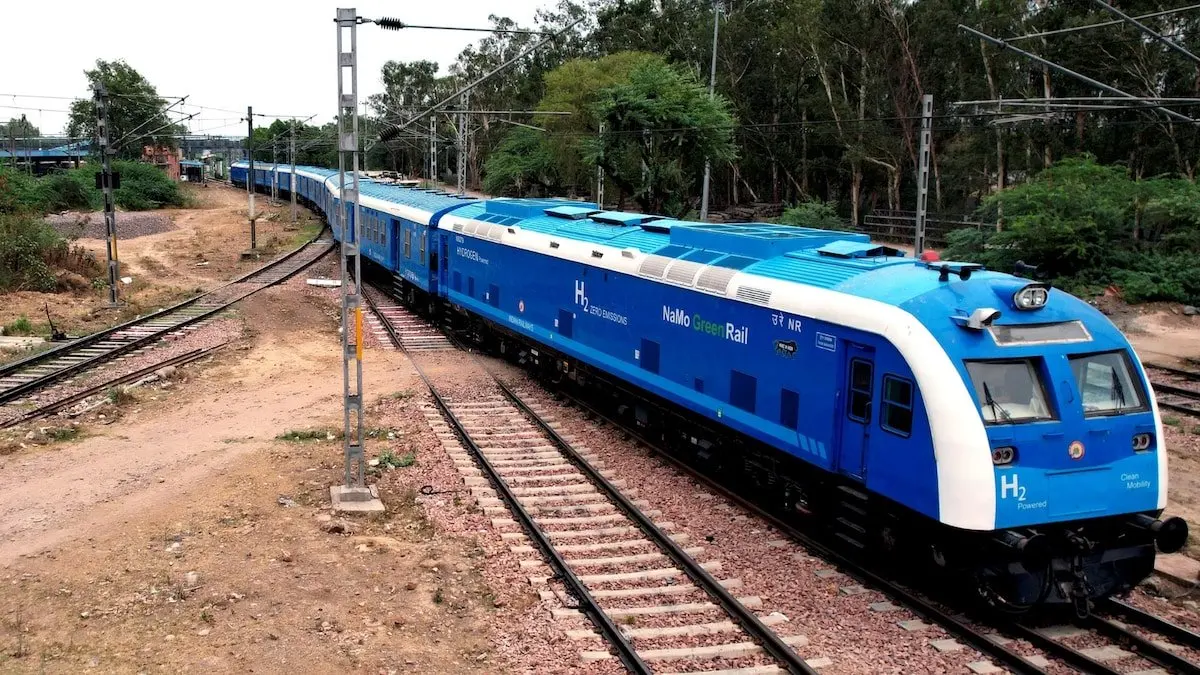
Experts indicated that the long-term impact of hydrogen on India’s energy transition and climate objectives hinges on the availability of affordable green hydrogen—produced with renewable electricity—and whether it remains economically viable for specific routes.
India is set to unveil its first hydrogen-powered train on Friday, to be inaugurated by Prime Minister Narendra Modi. The passenger service will operate between Jind and Sonipat in Haryana, covering a distance of 89 kilometers in two hours, with the train stopping at 12 intermediate stations.
A 1,200-kilowatt hydrogen fuel-cell propulsion system will run the 10-car train set, which can reach a maximum speed of 75 km per hour, according to a statement from the Ministry of Railways.
“This milestone reflects the latest stage in Indian Railways’ evolution in powering its trains, aligning with India’s broader transition from coal and steam to cleaner energy sources,” the statement noted.
“In basic terms, a hydrogen fuel-cell propulsion system generates electricity by combining hydrogen with oxygen from the air within a fuel cell. This electricity then powers the train’s motors,” explained Harpreet Singh Arora, a professor at Shiv Nadar University’s engineering school, in an interview with PTI.
“A hydrogen fuel cell train functions as an electric train that produces its own electricity onboard. Instead of relying on power from overhead lines, hydrogen, stored in high-pressure tanks, reacts with oxygen in a fuel cell to generate electricity,” added Moushumi Mohanty, senior programme manager for the electric mobility programme at the Centre for Science and Environment in New Delhi.
The only direct emission from the fuel cell is water vapor, she pointed out.
Hydrogen is classified as a “clean fuel,” as its combustion emits no harmful pollutants like carbon dioxide, particulate matter, sulfur oxides, or nitrogen oxides, which are typically released when fossil fuels are burned. The water vapor produced from burning hydrogen remains in the atmosphere for a short duration before becoming part of the natural water cycle.
The hydrogen fuel for the train is “produced separately, compressed, transported to the refueling station, and stored in tanks on the train,” Mohanty explained to PTI.
An indigenous hydrogen storage and refueling facility has been established at Jind for the trainset, as per the statement.
“The hydrogen-refueling infrastructure comprises hydrogen production or supply facilities, compression systems, high-pressure storage tanks, dispensing equipment, and safety systems. Hydrogen is typically compressed to high pressures, stored onsite, and then transferred into onboard tanks through specialized dispensing systems,” Mohanty said.
In terms of safety features, both the train and the refueling facility are equipped with devices to detect hydrogen leaks and unusual heat, as well as an automatic shut-off system that can independently cut off hydrogen supply without human intervention, according to the ministry’s statement.
The statement went on to add that the pilot’s cabin has been specifically designed for safety, including a special mode that enables the train to be moved to safety in emergency situations.
With this initiative, India joins a select group of nations, such as Germany, France, China, the United States, and Japan, that have either implemented hydrogen trains on certain routes or are exploring the fuel for cleaner rail transportation. Germany was the pioneer, launching the world’s first hydrogen train into commercial service in 2018 in Lower Saxony.
“The launch of a hydrogen-powered train is a significant milestone for India’s energy transition, representing a shift towards cleaner, low-emission transport. It supports India’s climate goals by reducing reliance on fossil fuels and lowering greenhouse gas emissions, particularly in energy-intensive sectors like railways,” stated Arora.
In its fourth and latest Biennial Update Report submitted to the United Nations on December 30, 2024, India outlined its greenhouse gas inventory for 2020.
The transport sector accounted for over 13% of energy-sector emissions—which constituted 92% of the country’s carbon dioxide emissions—of which road transport contributed 94%, while railways accounted for 1%.
However, “the sustainability of hydrogen as a clean-energy source relies not only on the fuel itself but also on its production methods, supporting infrastructure, and applicable sectors. To fully unlock its de-carbonization potential, a greater focus should be placed on green hydrogen, produced through water electrolysis using renewable electricity,” stated Mainak Mukherjee, a product analyst at the global technology firm SLB.
Mohanty noted, “Deployment of hydrogen should prioritize the production of green hydrogen, minimize leakage throughout the supply chain, enhance fuel-cell efficiency, and target applications where direct electrification is impractical.”
A 2024 study from researchers at the University of Michigan in the US indicated that green hydrogen could be strategically utilized in powering heavy-duty road, rail, aviation, and marine transport, where electric alternatives face limitations in load capacity and range.
Findings published in the journal “Joule” revealed that electric-powered transport is approximately three to eight times more efficient than using hydrogen directly or through electrofuels derived from green hydrogen and captured carbon dioxide.
“Experiences from Germany and France have shown that hydrogen-powered trains can complement diesel trains to some extent on non-electrified regional rail lines, where electrification poses technical or economic challenges. Their successful implementation will depend on factors such as route suitability, shared refueling infrastructure, and the utilization of green hydrogen to maximize emissions reduction,” Mukherjee noted.
Mohanty added, “Considering that over 95% of India’s broad-gauge railway network is already electrified, hydrogen trains are anticipated to play a niche role instead of becoming a mainstream solution.”
“Their long-term contribution to climate goals will rely on the availability of affordable green hydrogen and their economic competitiveness on specific routes,” the electric-mobility expert concluded.
The railways present an opportunity for experimenting with hydrogen deployment due to their fixed routes and schedules, simplifying the establishment of refueling infrastructure.
“In addition, trains require high power over extended distances, which hydrogen can efficiently supply,” Arora said.
“Hydrogen fuel cells generally have an efficiency rate of around 50-60% in converting hydrogen to electricity. The efficiency of hydrogen production through electrolysis typically ranges from 60-70%, depending on the technology and conditions used,” he remarked.