







While salmon sperm, aka PDRN, sounds like pure clickbait, it’s the ingredient dominating skin-care conversations right now, and the science behind it spans decades.
Featured Experts
- Elaine Kung, MD is a board-certified dermatologist based in New York
- Jenny Liu, MD is a board-certified dermatologist based in Minneapolis
- Seul-ong Ohk is a senior researcher on the Strategic Research Planning Team at the PharmaResearch R&D Center
- Tim Lee, PhD is chief scientific officer at Prollenium
1980s–1990s: Therapeutic Roots
While PDRN (polydeoxyribonucleotide) seems like a modern K-beauty innovation, New York dermatologist Elaine Kung, MD says its therapeutic roots date back to the 1980s in Italy. “Researchers originally explored PDRN for its profound regenerative capabilities in wound healing,” she explains. In the 1990s, a Korean company called PharmaResearch began using PDRN as a pharma ingredient, focusing on wild salmon in a specific province of Korea.
“PharmaResearch pursued the localization of PDRN production technology using this source,” says Seul-ong Ohk from the Strategic Research Planning Team at the PharmaResearch R&D Center. “The structure of salmon DNA is highly similar to that of human DNA, allowing it to function effectively in the body with a low risk of side effects. In particular, the salmon’s reproductive cells are rich in nucleic acids that play an important role in supporting skin health.”
2009: Quality Control
After years of research, PharmaResearch developed its patented DOT—DNA Optimizing Technology—which Ohk says can process highly purified salmon-derived DNA into various forms (skin-care products, injectables and more) under strict quality control. “What makes PDRN interesting is how it works on a cellular level,” says Minneapolis dermatologist Jenny Liu, MD. “It helps activate specific receptors in the skin that reduce inflammation and promote healing, and it also provides building blocks that skin cells can use to repair themselves and regenerate.”
2014: Injectable Breakthrough
The leap from medical wound care to aesthetic medicine occurred in South Korea. “Cosmetic researchers realized that the exact mechanisms healing severe wounds could be harnessed to reverse signs of aging,” says Dr. Kung. “This culminated in 2014 when PharmaResearch launched an injectable called Rejuran. By utilizing polynucleotides (PN), it revolutionized the ‘skin booster’ category and became a global phenomenon.”
Ohk explains that what is often referred to as “injectable PDRN” is, in fact, a PN-based medical device, such as Rejuran and Rejuran HB Plus. “PN is a high–molecular weight material, and when injected into the skin, it can help improve skin texture by supporting hydration and providing physical support within the dermal layer,” he says.
Though these injectables are widely used in many parts of the world (Asia is the largest market by far), they are currently not yet FDA-approved in the United States. “The strongest data we have on salmon DNA is for its injectable forms,” Dr. Liu says. “We’re seeing meaningful results in terms of collagen production, healing, and even improvements in fine lines or pigmentation over time, which is why it’s become popular in regenerative aesthetics.”
2017: Topical Takeover
PharmaResearch made its foray into topical products in 2017, launching its signature Rejuran Turnover Ampoule ($52) in Korea (it launched in the U.S. this past March). Ohk says Rejuran’s topical products contain c-PDRN, which is manufactured in a lower molecular weight compared to PN. “This allows for relatively better skin absorption when applied topically,” he explains.
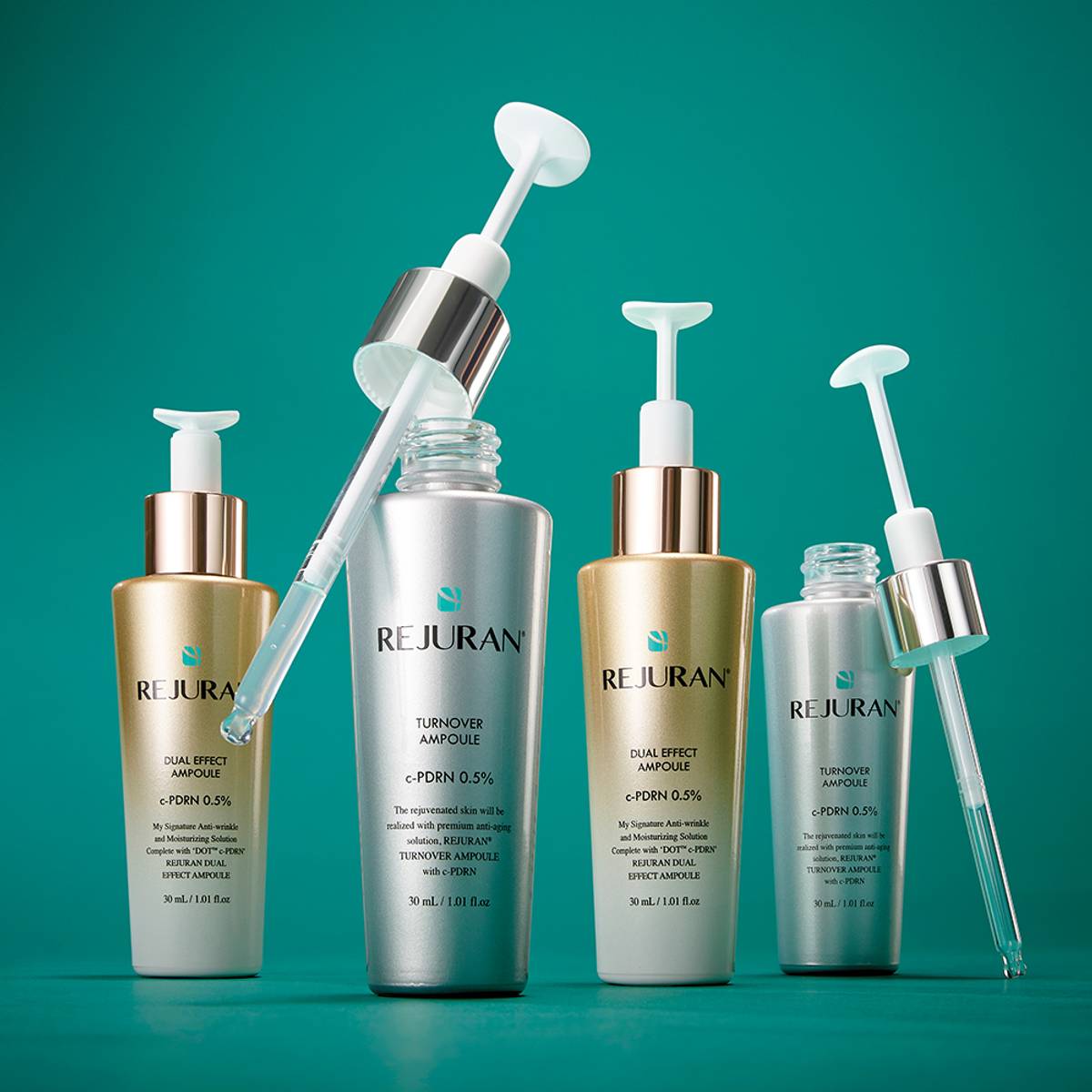
Rejuran sparked a worldwide trend, inspiring other brands to launch topical PDRN serums, creams, masks and more. “These products are much more limited because these DNA fragments are relatively large and don’t penetrate skin as deeply,” Dr. Liu says. “They can still help with hydration and barrier support, but they’re not going to replicate the effects of in-office treatments. PDRN skin care is a promising category, but we need more standardized data, especially when it comes to long-term outcomes and optimal use.”
2024: Vegan PDRN
As the demand for sustainable, ethically sourced and vegan products surges, the skin-care space is innovating rapidly. “Because traditional PDRN is animal-derived, vegan brands are creating brilliant alternatives designed to bio-mimic the effects of salmon DNA,” says Dr. Kung. “There’s phyto PDRN—DNA fragments from resilient plants, like Korean ginseng—and also bio-fermented PDRN, or biotech PDRN. This is the bleeding edge of cosmetic chemistry. Using microbial fermentation—often utilizing specific bacteria or microalgae—labs are cultivating highly purified polynucleotides.” However, while the clinical literature supporting salmon-derived PDRN is decades deep, Dr. Kung points out that data on these vegan alternatives is still emerging.
2025 – 2026: Enhanced Results
Similarly to how PRP (platelet-rich plasma) or exosomes can be applied after in-office treatments like microneedling and lasers, PDRN can also be used. In early 2025, a company called Prollenium introduced VAMP, a patent-pending, topical PDRN solution that is meant to be paired with microneedling to improve skin elasticity, hydration and radiance.
This March, it launched VAMP Advanced, a next-gen version featuring five times more medical-grade, high-purity, 0.5-percent PDRN, along with amino acids, vitamins, minerals and hyaluronic acid. Dr. Tim Lee, chief scientific officer at Prollenium, says it can be used to complement and enhance the results of in-office facial treatments. “This approach isn’t about immediate transformation, but rather gradual, progressive improvement,” he explains. “Optimal results are typically seen after at least three treatments administered monthly. Over time, patients notice better hydration, smoother texture, improved elasticity and an overall healthier skin appearance.”

The Future: What’s Next
Though getting FDA approval for PN injections in the U.S. may be a pipe dream, PDRN skin-care products are moving full steam ahead, and we’ll be seeing a host of new formats, primarily stemming from K-beauty. “PDRN is at the forefront of the future of regenerative aesthetics, which is moving beyond simply ‘filling’ wrinkles and toward skin repair that actually turns back the clock on its biological age,” says Dr. Kung. From topicals to injectables and beyond, we are just scratching the surface of this trending ingredient and are excited to see what comes next.